Sri Lanka: One Island Two Nations

Search This Blog

Friday, 2 April 2021

Menthol Marketing Exposes Institutional Racism

Photograph Source: James Bowe – CC BY 2.0


BY 

When it comes to destroying Black lives, no modern American institution can match the tobacco industry.

It isn’t just that 45,000 Black Americans die of tobacco-related diseases every year; it isn’t just that tobacco use is the main risk factor for the leading causes of death—heart disease, cancer, stroke—among Black Americans; it isn’t just that lung cancer, caused mainly by smoking, is the form of cancer that kills most Black Americans; it isn’t just that Black smokers suffer higher rates of death from causes related to smoking. It’s worse than that.

What’s worse is that much of this toll of death and disease is not an incidental result of the fact that about 15% of African Americans are smokers (most of whom want to quit). It’s a result of the tobacco industry’s sixty-year history of targeted marketing of menthol cigarettes to the Black community. This is institutional racism operating in the plain light of day.

Menthol is a problem because it’s a sales gimmick that actually works. In adspeak, it “cools and soothes” the throat. In fact, it numbs the throat and makes tobacco smoke less harsh. This makes it easier for kids to start smoking and harder for adults to quit.

In the 1950s, only around 5% of Black smokers smoked menthol cigarettes. But marketing researchers found that Black smokers had a slight preference for menthol cigarettes, a preference that tobacco companies sought to exploit. And so the industry began to heavily advertise menthol brands in Black communities and Black media. The industry also began sponsoring jazz festivals and other cultural events in Black communities, further linking menthol brands to Black identity.

It all paid off handsomely for the corporate pushers. By the mid-70s, 44% of Black smokers used menthol cigarettes. The figure today stands at 85%, tragically attesting to the power of the industry’s predatory marketing.

Although some advertising tactics (e.g., big billboards) were ended by the Master Settlement Agreement in the late 1990s, the industry continues to offer point-of-sale and discount promotions of mentholated tobacco products—small, cheap cigars are the latest example—in Black communities. In its promotions the industry also appropriates elements of Black culture, jazz musicians and rap DJs being some of its favorite images.

Public health groups have fought Big Tobacco’s use of menthol for years. The African American Tobacco Control Leadership Council has tried, with notable successes in California and Massachusetts, to get menthol banned in cities and states around the country. Here in North Carolina, the historic belly of the tobacco beast, the Center for Black Health and Equity has worked to raise awareness in the Black community about the tobacco industry’s manipulative advertising of menthol cigarettes and cigarillos.

Passage of the Family Smoking Prevention and Tobacco Control Act in 2009 gave the FDA an opening to ban menthol in tobacco products. The act banned fruit and candy flavors in cigarettes but, in deference to the tobacco industry’s political clout, exempted menthol. A ruling on menthol was supposed to hinge on the results of future research examining its health impacts.

In 2011, the FDA’s Tobacco Products Scientific Advisory Committee reviewed the evidence and concluded that “removal of menthol in cigarettes from the marketplace would benefit public health in the United States.” In 2013, the FDA conducted another review and again found that menthol cigarettes posed a greater health hazard than regular cigarettes. The initial determination, a decade ago, should have been the last nail in menthol’s coffin. Yet the FDA failed to act.

After the 2013 review, public health groups filed a citizen petition calling on the FDA to ban menthol as a tobacco flavoring. Although this led to no immediate action, years of pressure by public health groups spurred Scott Gottlieb, FDA director under Donald Trump, to propose enacting a menthol ban. But Republican Richard Burr, following in the footsteps of another North Carolina senator funded by the tobacco industry, Jesse Helms, fought the proposal. Burr convinced Trump to oppose FDA action on menthol, and the proposal died.

Last summer, in July 2020, the African American Tobacco Control Leadership Council and Action on Smoking and Health, in partnership with the American Medical Association and the National Medical Association, filed suit in U.S. District Court in northern California to compel the FDA to respond to the citizen petition submitted in 2013. With charitable understatement, the suit called the FDA’s non-action on menthol an “unreasonable delay.” The FDA filed a response to the suit, promising to respond by April 29, 2021.

Tobacco companies of course want to keep using menthol. The industry is now spending millions on a referendum campaign to overturn California’s ban. One breathtakingly disingenuous ploy is to claim that menthol bans will give police a reason to stop and search Black people. This is a lie, as Karen Bass, congressional representative from California and former chair of the Congressional Black Caucus has pointed out; a ban would prohibit selling mentholated tobacco products, not possessing them.

It’s not clear what happens next. The FDA could finally take action and ban menthol. If the Biden administration approves the ban, this would put the quickest end to the tobacco industry’s unconscionable history of institutional racism.

If the FDA, now headed by Biden appointee and acting commissioner Janet Woodcock, again fails to act, Congress could step up and pass legislation to take mentholated tobacco products off the market, as Canada and the European Union have already done. If it comes to this, public pressure will be needed to overcome the tobacco industry’s $50 million-per-year lobbying efforts and make this change happen.

Institutional racism can be hard to see because it’s often buried in organizational routines that are not consciously intended to be racist but which consistently produce racial inequalities. The targeted marketing of mentholated tobacco products to the Black community is an exception. In this case, the example is stark.

n the long run, the solution to the ongoing global pandemic of tobacco-related disease is to abolish tobacco companies. Short of that, we now have an opportunity to significantly curtail the industry’s ability to profit from the destruction of Black lives. If Black lives matter, we must not let the opportunity pass.

Michael Schwalbe is a professor of sociology at North Carolina State University. He can be reached at MLSchwalbe@nc.rr.com

Thursday, 1 April 2021

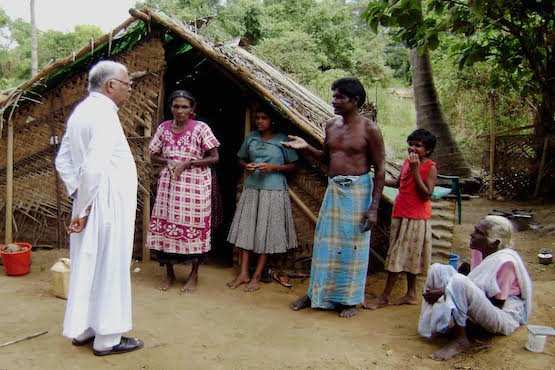
 Former Bishop of Mannar Rayappu Joseph passes away


 01 April 2021

The former Catholic Bishop of Mannar and lifelong Tamil rights activist, Right Reverend Dr Rayappu Joseph has passed away, aged 80. Notably, Rt. Rev. Joseph used information from local government offices in the Kilinochchi and Mullaitivu districts to pinpoint that 146,679 people were unaccounted for following the final stages of the armed conflict in May 2009.

Born in Neduntheevu (Delft) on April 16, 1940, to a practitioner of indigenous medicine, Rayappu Joseph studied at Jaffna St Patrick’s College, after an early childhood spent in Cheddikulam and in Mannar.

He began his priesthood in 1967 and became Bishop of Mannar in 1992, retiring in 2015 following a stroke.

Rt. Rev. Joseph was a prominent and vocal defender of human rights and a campaigner of justice for Tamils. He authored numerous reports detailing the forcible disappearances of Tamil youths during the armed conflict and served as a witness for Sri Lankan military attacks, such as the 1999 Sri Lankan army shelling of Madhu Church which saw 37 Tamil civilians killed 64 wounded.

The former Bishop was a vocal critic of militarisation and regularly protested against state violations during the armed conflict, as well as advocating for the release of Tamil political prisoners. 

Rt. Rev. Joseph was often seen at rallies in support of Tamil self-determination, including during the wave of Pongu Thamil rallies in the early 2000s. In 2005 he said:

"There is nothing wrong in the Tamil nation raising its national flag. The Tamil national flag is not the Tigers’ flag but it is the Tamil people’s flag. Hoisting it is not against peace. Many who shout against it are silent over the recent killings.”

Rt. Rev. Joseph frequently called on the Liberation Tigers of Tamil Eelam (LTTE) to work towards an end to violence, and led several demonstrations calling for peace. He was occasionally involved in mediating disputes between Tamil civilians and the LTTE.

Following the end of the armed conflict, Rt. Rev. Joseph continued campaigning for justice for the genocide committed against the Tamil people, defying the Rajapaksa regime’s post-war crackdowns on civil society and calling for an international investigation. His work with local government statistics, leading to the figure of 146,679 unaccounted for, was crucial in countering the Sri Lankan state’s claims of ‘zero civilian casualties’ from its onslaughts in the final stages of the war.

He was staunch in his rejection of domestic mechanisms for justice, writing in a letter to the Sri Lankan president’s 2014 Commission on Missing Persons:

“I have over the years grown to be weary of domestic mechanisms in resolving serious injustices that Tamil people have faced over the period of the war, prior to it and after its conclusion. Over the years many commissions such as yours have been set up and there is absolutely no shred of evidence that they have tackled impunity. Most, if not all of these commissions have provided only to be eye washers for the then Governments in power.”

In 2014, Rt. Rev. Joseph formally convened the Tamil Civil Society Forum, which remains a vital and critical voice of the Tamil people in the North-East today. He continued his advocacy and campaigning in defiance of threats from the Sri Lankan government and military, and even backlash from the Sri Lankan Catholic Church.

Rt. Rev. Joseph largely stepped back from campaigning and public life after suffering a stroke on May 2, 2015. He had been travelling to Colombo to meet then US Secretary of State John Kerry. His last major public engagement was the launch of the Talaimannar Public Rail Service during the visit of Indian Prime Minister Narendra Modi.

Rt. Rev. Dr Rayappu Joseph passing on April 1, 2021 has unleashed an outpouring of tributes to his decades of tireless campaigning and advocacy.

 Full Video: Mangala Samaraweera’s Remarks On UNHRC Resolution


MARCH 31, 2021

During the last few weeks, much has been talked about the Geneva resolution which was presented on March 23. I felt it as my duty to speak about this as the Minister of Foreign Affairs at that time when Sri Lanka along with the United States, United Kingdom and 40 other countries co-sponsored the 30/1 resolution on Sri Lanka.

If we are to go back to the beginning, it was on May 23, 2009, just a week after the conclusion of the deadly war with the LTTE, the Secretary-General of the United Nations, Mr. Ban Ki-moon, came to Sri Lanka on the invitation of President Mahinda Rajapaksa.

In the joint communique which was issued at the conclusion of this meeting, the two sides agreed to conduct an inquiry into the alleged war crimes and the alleged human rights violations in the country. Within four days of Mr. Ban Ki-moon’s arrival, the United Nations Human Rights Council (UNHRC) in Geneva called a special Session on Sri Lanka to discuss the situation here.

For this Session, Sri Lanka very hurriedly presented a resolution to the UNHRC, the 25/1 resolution of March 2014 on promoting reconciliation, accountability and human rights in Sri Lanka and to undertake a comprehensive investigation into the alleged serious violations and abuses of human rights and related crimes by both parties.

In fact, this resolution, if it would have been implemented, would have been quite good and that is why the majority of the international community hoped Sri Lanka would be bound by their promises and therefore, 29 countries voted in favour with 12 voting against.

In 2009, 29 countries supported Sri Lanka where they even promised an accountability mechanism to look into human rights violations, talked about improving the human rights situation here and even talked about the 13th Amendment for the first time in an international forum like the UNHRC. They got 29 countries to support them but unfortunately from that point onwards, like all other promises of the Rajapaksa era, they didn’t bother to implement many of them.

And that is why the trust within the international community kept decreasing and in 2012, 29 fell to15 in terms of the countries that supported the Sri Lankan government. In 2013, only 13 countries supported us. In 2014, the UN Human Rights Council passed the Sri Lanka resolution by a vote of 23 to 12, with 12 abstentions.

And this time, we saw again that our support base has fallen to 21 countries and most of them are autocracies who are more interested in hiding or protecting their atrocities than supporting Sri Lanka.

So it is in this context that I went to Geneva as the Minister of Foreign Affairs just a couple of weeks after the election. My first visit was to meet my good friend and who I call my sister minister, Sushma Swaraj Ji. On the very day I was sworn in, I was in India meeting her and then I went to Geneva to meet the United Nations High Commissioner for Human Rights Prince Zeid Ra’ad Al Hussein. I made a very special request from him not to go ahead with the 2014 resolution because according to the resolution as the first report of that resolution was to be tabled in Geneva in March, 2015.

Fortunately for the country, the government changed on January 8. I was there in February I believe and we got them to agree not to table that report in March and instead we requested time till September to submit our own resolution which will cover the question of reconciliation and accountability. In fact, I told Prince Zeid quoting from our manifesto of the presidential election, item 93, “Since Sri Lanka is not a signatory to the Rome Statute regarding international jurisdiction with regard to war crimes, ensuring justice with regard to such matters will be the business of a national independent judicial mechanism.”

So we said, give us a little more time until September where we will present our resolution for a national independent judicial mechanism and the Prime Minister along with a group of top level experts drafted this resolution and then we invited the US Ambassador and UK High Commissioner to co-sponsor this resolution.

This whole idea that we sponsored a foreign resolution is an utterly misleading lie. We managed to get the powerful countries to back us and each and every word in that resolution was approved by President Sirisena. For example, President Sirisena’s speech from February 4, 2016 and I quote, “I clearly state that we are facing these resolutions to protect the pride and dignity of our country, our people and our security forces and also to make our tri forces to be internationally renowned armed forces. We should face these resolutions with patience, discipline and decorum so that our country should be respectfully recognised by all international organisations including the UNO and all states in the world.”

These are the very words of our president and as a result, Sri Lanka got the friendship and the support of the whole world. In fact, when our joint resolution was presented in Geneva in September, not one country opposed it. Now this time when an investigation was initiated in Geneva, Pakistan and China got up and opposed that. However, all power blocs supported us in 2015. We had the support of the USA, the European Union, the UK, Japan, India and most of all China and Russia. Forgive me for saying so but I believe this was one of the golden moments in the history of foreign policy in this country. Whatever anyone says, I will challenge them anywhere to argue that this was actually a golden moment where we stuck to our words carrying out a balanced foreign policy which all countries appreciated.

Watch the remarks by former Foreign Minister Mangala Samaraweera at the Press Conference held at the Solis Hotel on 31.03.2021 – English: 

Sinhala:

Read More

From digitisation to the digital transformation of the justice system: An overview – Part II

The path to a digital courtroom has become a necessity to ensure the timely and efficient mechanism of the justice system as seen with the onset of the COVID-19 pandemic and its effect on the traditional workings of not only the court system but every aspect of our lives. Although a complete digital transformation of the legal system appears to be a challenge rather than opportunity to adapt to the local framework, it presents a vision for newer, alternative employment opportunities in favour of those that would be replaced by a digitalised system and greater scope and drive to further digital literacy among professionals and the general public. Therefore, our objective should be directed towards a digital justice system that it is not relegated to a temporary transition but a stride towards an overarching transformation – Pic by Shehan Gunasekara


Thursday, 1 April 2021

Success stories

There are a number of success stories when it comes to digitalisation of the justice system which Sri Lanka can look towards for inspiration. 

For example, in India, the E-courts Mission Mode Project which was part of the National eGovernance Plan (NeGP) began in 2007 to increase the affordability, accessibility, predictability, reliability and transparency of the justice system. Today, 14,249 courts are computerised with the installation of the Case Information Software (“CIS”) providing daily updates on litigants’ cases while the National Judicial Data Grid (NJDG)11 system stores data regarding pending cases, disposed cases and total cases under different heads. 

Recent progress has also seen the implementation of new Business Intelligence Tools and desktop video conferencing for recording of evidence in sensitive cases like sexual offences are some instances where technology was used judiciously. The project has also seen the introduction of portals like ‘epay,’ ‘efiling’ and ‘e-courts services’ and applications like NSTEP and ‘JustIs’ continuing the growth towards digitalisation. 

While data protection and privacy remain significant concerns, such concerns have been allayed in the Indian model in the form of effective data protection mechanisms, policies and laws. For example, the CIS introduced Judicial Officers numbers, CNR (Case Number Record) numbers and unique process IDs as measures to ensure the security of records although results have yet to be seen.12


Digital transition challenges

However, a digital transition is not without its challenges. A pioneer in the e-court system, South Korea, adopted a gradual transition since the 1970s. Rather than going paperless immediately; it started with paper-on-demand to allow users to adapt towards using a paperless system13 indicating the need for planning, time and patience when moving towards digital transformation. 

Several ambitious projects have halted due to a combination of factors. The State of California which had to abandon a statewide case management system after surging costs overwhelmed the initial budget. Another situation arose in the statewide Integrated Courts Management System integrated by the State of Victoria (Australia) in 2005 which projected an uncertain future due to budgetary fluctuations and scheduling conflicts14. It is thus advisable to prioritise the resolution of the disputes of the majority of the public when initialising a strategy for the digital future of the justice system in Sri Lanka while taking into account the strengths of the existing systems. 


SL digital leadership and innovation

In 2012,15 Sri Lanka became the first country in South Asia to introduce commercial 4G services becoming a regional leader in connectivity, innovation and incubation. The country also boasts a mobile penetration of over 100% with the market rapidly shifting towards the Smartphone segment. Given that IoT (Internet of Things) solutions primarily rely on Smartphone use and connectivity, there is substantial runway for growth and adoption of IoT solutions in Sri Lanka. 

Web-based solutions are an integral part of internet use and as such can offer a simplified mechanism for management of attendance, salaries and other operational and administrative systems. Other possible additions include monitoring key performance indicators (KPIs) for members of the judiciary allowing both qualitative and quantitative professional evaluation and assessment. 

Additionally, revising court resources based on objective data regarding the case flow, efficiency and quality, and introducing other modern court management techniques can spur greater efficiency of the courts. As such, we must be proud of the digital leadership and innovation Sri Lanka has produced in the recent past. 

At the helm of our digital development are a community of concerned individuals who have cleared a path based on high expertise, knowledge, skill and integrity. The ambitious advent of 5G technology in Sri Lanka back in 2018 has also given rise to significantly faster and higher transfer rates through improved mobile broadband connections, shorter response times (latency), ultra-reliable connections and a secure internet of things among its many benefits. 


Requirement of digital literacy

While the ambitious progress of the recent past is optimistic, the primary challenge is the harmonisation of technological advancement and the requirement of digital literacy of the general public without which the execution of a digital transformation and actualisation of the potential seen thus far is impossible. In this context, even if the systems are developed, the difficult chapter that lies ahead is for the users to adapt themselves to take optimum benefit of the new systems. 

By 2019, overall computer literacy reported in Sri Lanka was 30.8%.16 Low digital literacy will continue to be barrier to digital inclusion, particularly among the urban poor, where women are 1.6 times more likely to lack basic computer literacy which in turn acts as a barrier to their internet access.17 On the other hand, youth (aged 15–19 years) showed the highest computer literacy rate (64.9%) among all other age groups highlighting the need to inculcate digital skills and integrity to ensure the intragenerational development to assure the country’s digital continuity and future growth. 

At present, Sri Lanka has gained wide traction for its growing tech talent pool and service culture and is home to local IT pioneers with global integrity. However, the low digital literacy rate makes it challenging to achieve the optimum benefit and potential of IT systems as the quality and development are hindered by the obvious challenge that users face in being unable to adapt to continually evolving technology. 

Our journey to a digital transformation cannot take shape without a fundamental change to the education and skills development of the young users who will be the torchbearers and advocates of this mission. Hence, a vision for a sustainable digital transformation cannot take shape without a nation that is educated and qualified to quickly achieve a high degree of digital literacy. 

It is imperative that the Government prioritise its spending and invest in developing language skills, knowledge building and sharing of innovative and emerging technologies in addition to cultivating a high degree and standard for ethics and integrity. It is imperative that this opportunity be seized and developed in the near future if we are to persevere for a digital transformation with holistic development in this vital area. 

We need to understand the gravitas of our present predicament as a nation, and I urge readers to consider the Annual Reports of the Central Bank to understand the reality of digital literacy and IT skills development in Sri Lanka. Rather than perceiving it to a detriment, we must embrace our current situation with an opportunistic fervour for development. 

The need to improve both basic computer literacy and digital literacy (the ability to understand information and perform tasks in digital environments) must extend to the professionals in the justice system to ensure a smooth transition and less deterrence to the digital landscape of court operations. 


Digital devices

Web-based solutions offer a practical first step on this journey. Further, growing phenomena such as Bring-Your-Own-Device (BYOD) allows smartphones and tablets to rapidly replace large volumes of paper and has changed the way legal professionals operate. MDM18 (Mobile Device Management) solutions are the most common form of BYOD management allowing for the administration of mobile devices. MDM solutions can both deliver applications to user-owned devices and secure the corporate apps and data on them. 

HCM (Human Capital Management) software which supports a range of HR functions through recording and storing data can be implemented through mobile apps. However, if the Ministry of Justice is to provide judicial officers with the tablets/PCs, it is important to weigh both the benefits and practical challenges that must be faced. Upon the execution of the digital transition, the Ministry of Justice must also consider whether the existing devices in the courts can be used and are compatible with the newer digital solutions. 

Today, Apple products have dominated business computing because of their tighter security and versatility in contrast to Microsoft Windows. However, the high costs and impressive selection of apps for its devices still lack many of the major networking and communication apps that large businesses rely on every day. Regardless of the type of software used – Apple, Samsung, Microsoft – it is important take precautions when contracting with Original Equipment Manufacturers (OEM). 

These companies manufacture and sell products or parts of a product that other companies sell to their own customers while putting the products under its own branding. Because of the extent of the control that OEMs have over equipment and software, it is imperative that they provide some level of security assurance to clients and be compatible with system level security controls (protocols, access controls, etc.) to ensure proper implementation of Security Architectures and reduce overall system risk. Contracts between clients and OEMs must be meticulously scrutinised and drafted to provide maximum security. 

Further, where existing devices in the courts are incompatible with the newer digital solutions, alternative IT solutions can be procured. Other considerations at the most formative stage include Wi-Fi facilities (WLAN – wireless LAN) and LAN which should be available in courtrooms while mobile applications, SMS and secured e-mail systems could be adopted for communications as is a practice embraced by most industries. The use of video conferencing enabled court rooms allows for greater accessibility and availability of testimonials allowing litigants to connect from anywhere in the world for a hearing. 

The path to a digital courtroom has become a necessity to ensure the timely and efficient mechanism of the justice system as seen with the onset of the COVID-19 pandemic and its effect on the traditional workings of not only the court system but every aspect of our lives. Although a complete digital transformation of the legal system appears to be a challenge rather than opportunity to adapt to the local framework, it presents a vision for newer, alternative employment opportunities in favour of those that would be replaced by a digitalised system and greater scope and drive to further digital literacy among professionals and the general public. Therefore, our objective should be directed towards a digital justice system that it is not relegated to a temporary transition but a stride towards an overarching transformation.

(The writer is Consultant, Sri Lanka Judges’ Institute. Retired Judge of the Supreme Court of Sri Lanka. National and International Arbitrator. Research assisted by Purnima Pilapitiya.)

Footnotes

11 https://ecourts.gov.in/ecourts_home/ 

12 https://calcuttahighcourt.gov.in/downloads/ecourt_files/cis3/What_is_CIS.pdf

13 Improving Court Efficiency: The Republic of Korea’s E-Court Experience 

14 https://static.legalsolutions.thomsonreuters.com/index/pdf/lessons-learned-in-courts-digitisationwhitepaper.pdf 

15 https://www.pressreader.com/sri-lanka/sunday-times-sri-lanka/20121230/281676842246510 

16 http://www.statistics.gov.lk/Resource/en/ComputerLiteracy/Bulletins/AnnualBuletinComputerLiteracy2019

17 http://www.ft.lk/ft_view__editorial/Bridging-the-digital-literacy-gap/58-702581 

18 https://blog.vsoftconsulting.com/blog/byod-in-the-workplace-the-difference-between-mdm-andmam#:~:text=The%20most%20common%20form%20   of,mobile %20devices%20in%20 the%20workplace

 Examinations department too is to be privatized..!


(Lanka-e-News - 31.March.2021, 11.00PM) It is reported to Lanka e News that for the first time in the history of Sri Lanka, the Department of Examinations is going to be privatized. The move taken to privatize is a highly secretive and sensitive section of the Examinations Department, which, if left unverified, could certainly lead to larger corruption.

These days the Examinations Department is eaamining the GCE Advanced Level and Ordinary Level answer scripts. The marks and data will be computerized by the Department of Examinations within but from now on the Commissioner General of Examinations B. Sanath Poojitha has decided to hand it over to a private company data entry. Officials of the department have objected to this decision but the Commissioner General is scheduled to conduct a preliminary test today 31st.

Another suspicion here is that no one knows what private company is going to hand over these data entries. Sanath Poojitha once said that it would be handed over to a university. Whether it is a university or a private company, the fact is transferring of the true datas of the students who sat for the exams from the examination department would create a situation where massive corruption can take place.

Institutions in the country have been deteriorating rapidly since Gota government came to power. The best example of this is the issuance of fake quality reports by the Sri Lanka Bureau of Standards, allowing carcinogenic coconut oil to enter the country. Accordingly, the SLS certificate issued by the Bureau of Standards will no longer receive any international recognition. Sanath Pujitha of the Examinations Department is going to drag the country into a similar predicament. If this happens, the international recognition of the examination certificates issued by the Department of Examinations in Sri Lanka will surely fall to zero.

A prosperous country we lived - a pit where we fell

---------------------------
by     (2021-03-31 23:33:20)

UNHRC; Worrying about ants when elephants are stampeding –An African metaphor

Despite the uphill task, Sri Lanka should not cave in as that would be the end of the country’s sovereignty. Sri Lanka should however very aggressively and purposefully pursue alliances with countries in similar situations to counter the threats from not just the Western power block, but even from China at a future point in time.


by Raj Gonsalkorale-
March 29, 2021

Yet it remains the case that if Nigerian public and private sector players doing business with the Chinese elephant could improve their negotiating skills and be more ambitious about their negotiating positions, making better use of Nigeria’s ‘superpower’ qualities to minimise the drawbacks of its antlike ones, the future of Nigeria–China relations could be brighter and more beneficial for Nigeria than their past – South African Institute of International Affairs

Human rights violations allegedly committed by President Gotabaya Rajapaksa and the government of Sri Lanka are antlike compared to the Elephantine violations committed by giants in the world including the USA.

The UNHRC and the West so concerned about the Ants, looks totally disinterested when the Military in Myanmar mows down innocent civilians fighting for their human rights. They have not raised a finger or even a finger nail to do anything tangible to halt the Military juggernaut from killing more people and subjugating them to the power of guns and other military hardware. Military might has replaced human rights and the world looks on issuing useless statements from UN pulpits. The duplicity and differential treatment being meted out is sickening.

Yet, these human rights champions are concerned about internal matters of Sri Lanka, but not concerned about the Muslim extremists who killed more than 300 people during the Easter bombings in 2019 and prior to that the marauding LTTE who killed hundreds and thousands of innocent children, women, old men and women. The dark history of the LTTE has been inconsequential for the UNHRC or the West.

Much has been written about the plight of the poor in the US who have no rights if they are poor. The world knows how rights are violated in Saudi Arabia, protected by the US. They know about the violations in Israel, again protected by the US. Palestinians have been trampled, walls built around them, and basic living conditions denied to them.

Some of the member countries of the UNHRC, who voted against Sri Lanka have appalling human rights records. Some others who sat on the fence too would not have a place to hide if their records are exposed. Others who sat on the fence did not have the guts to either side with the Elephants or support the Ant who was being trampled.

Sections of the Tamil Diaspora, the beggars with the wound that will never heal, provided plenty of falsehoods to the Core group and the US, and the world media big shots sponsored the case against Sri Lanka basing their accusations on such falsehoods, and also infringing on Sri Lanka’s sovereignty as if Sri Lanka was still one of their colonial outposts.

It is high time Sri Lankan Tamils who wish to call Sri Lanka their home divorced themselves from the LTTE and their supporters overseas, and also kicked out their politicians from their electorates and elected a set of politicians who would help to develop their areas and improved their lot.

They must ask themselves what these politicians have done for them since independence. They must ask themselves what development support the Tamil Diaspora, barring a handful, have done to improve the economic wellbeing of Tamils in the North and the East by investing, and creating jobs or improving agriculture and agri industries so that people would have had more self-employment opportunities. Had they done this, the private sector in the North and East would have been booming today.

Instead they contribute to fill the coffers of the LTTE rump, who in turn puts money in the pockets of politicians in the West to continue their fake allegations about their “hopeless” fate in Sri Lanka. This money goes to keep LTTE atrocities under the lid and make the world think that the LTTE was a lily white set of freedom fighters without any blemish.

The current President Gotabaya Rajapaksa may have his faults. After all he is human. But, few seem to remember that had it not been for him and the service commanders at the time including Field Marshal Sarath Fonseka, who led very brave Forces personnel, and the political leadership provided by President Mahinda Rajapakse, the island of Sri Lanka would have had two Nations by now. There are of course those with short memories, who owe their freedom to talk, write and act because the LTTE were defeated militarily in 2009, and others with an objective that is still uppermost in their minds, and that is to create a separate nation in the North and the East.

Tamil people will have to make a decision whether they wish to be in one nation called Sri Lanka, along with the Sinhalese, Muslims and other ethnic groups, or whether they wish to live in a separate Nation. Such a decision however cannot be just the decision of Tamil people, it has to be a decision of all people of Sri Lanka including the Sinhalese, Muslims and other races, as they all have ownership of the one country and island where everyone lives.

If the Tamil people in the North and East and others living in the rest of the country wish to advance and work towards the concept of one country for all, they have to choose a different set of leaders who would pursue such a concept and work towards addressing how the road blocks that might be impeding the one country concept may be overcome. It has to be clear to the Tamil people that their leadership has failed them, and they have not benefited by the divisive politics practiced by their leadership. Solutions lie in compromise and consensus decision making by all people as no group could have aspirations that disadvantage another group. In particular, majority groups need to compromise more than minority groups as majorities can and they do create imbalances simply on account of their numerical strength.

Muslim people of Sri Lanka too need to make a decision about their future in Sri Lanka and whether they wish to replicate extremism practiced in countries like Saudi Arabia or whether they wish to practice moderation as the Prophet himself articulated very well in his teachings. Extremism cannot have a place in the country. Politicians who advocate extremist ideologies should be rejected by the Muslim people.

The UNHRC vote gave a clear indication as to who were with Sri Lanka and who had the self-respect to defend their sovereignty as this resolution was clearly aimed at infringing on the sovereignty of small, poor and developing nations by those powerful ones who had become the pseudo defenders of human rights. In saying this, there is no inference whatsoever that any violation of people’s human rights should not be opposed. It must be. However, such a condemnation has to be proportionate to the alleged or actual violations, and also dealt in equal measure irrespective of a country’s wealth or power. This is not the case today as evidenced by how the rich and the powerful treat some nations differently to others.

The Nigerian simile mentioned at the outset of this article rings true when it comes to Sri Lanka too. China is the Elephant in the room which has got the Western power block which includes India, to take measures against Sri Lanka and corral it using a UNHRC resolution, hoping that Sri Lanka will yield to such international pressure and cave into their demands.

Despite the uphill task, Sri Lanka should not cave in as that would be the end of the country’s sovereignty. Sri Lanka should however very aggressively and purposefully pursue alliances with countries in similar situations to counter the threats from not just the Western power block, but even from China at a future point in time. A very aggressive China, pursuing its own agenda of being the next super power of the world, could potentially become the Elephant that tramples nations like Sri Lanka if it felt that an Ant was standing in its way.

Sri Lanka no doubt wants and must have the support of all nations to improve their economic and social wellbeing of their people. It needs investments from all corners and not loans and handouts. Sri Lanka’s development and self-sufficiency has to come from the confidence it generates to attract investments. In this regard, many initiatives being taken by the Rajapaksa government has to be lauded and encouraged, while those opposed to the government should offer constructive criticism of government policies and practices. A democratic opposition should not resort to spreading fake news to pursue a genuine political agenda unless that agenda is also as fake as the fake news.

 Sri Lanka’s Judiciary, Oppressed Litigants & Defied Public Discontent


By Damith Wickramanayake –

Dr. Damith Wickramanayake

The review of Colombo Telegraph’s article “Judging the Judges”, dated 15th August 2020 is to spotlight three Maxims oblivious to the public, to illustrate, they too like the Author Anaga are being inveigled by fraternity’s empathy on litigant misery, in reality, a guileful deception ornamenting Judiciary’s ceremonial events, forgotten immediately thereafter. These illustrated by precursors 1a) to 1f) below are further explicated at 2 and 3 subheadings for invoking revelations in columns of the like of “Contempt of Litigant’s”, dated 22nd Jan 2020 by K Balenrda for enlightening the public, including litigants, on the debacle of due Constitutional rights of People’s Judicial Power deprived. It’s to entreat unflinching unequivocal Public support for mobilizing the Three Maxims: M(1) Law is knowledge for all ; M(2) One cannot be his own judge M(3) The profound citation that Judiciary’s supremacy, is not by virtue of its infallibility but in reality by self- empowerment usurping from Jurisprudence that its final. The obliviousness of the Maxims has emboldened stealthy manoeuvring the inconsistency in Constitutions’ Clause 3 empowering clause 4c to “enjoy” the People’s Judicial Power as opposed to diligently serving its interest that too without Constitutional empowerment for scrutiny by the people the “enjoyment” is not abused, the propellant of Judiciary’s, exacerbating decay. The Judiciary’s eroding inefficacy long ignored by the Parliament reveals, imperativeness of engaging Multidisciplinary expertise, a vital requisite for advancement of any discipline is relevant to stall escalating disarray of Sri Lanka’s Judiciary. It’s evinced from practices of Judiciary’s of repute comprising a blend of Professional (PJ) and Lay (LJ) judges of Multidisciplinary expertise. Such mix supported with e-court services, could mould clause 4c to function in conformance with People’s Judicial Power and direct its advancement to an AI (Artificial Intelligence) driven system resilient to rent seeking influences currently eroding the nation’s socioeconomic wellbeing.

A vital few Precursors Breaching Peoples Judicial Power

These precursors breaching People’s Judicial Power manipulating the aforesaid Constitution’s inconsistency and the obliviousness of the Maxims, exacerbating the debacle of litigants’ misery and adversities to the nations’ socioeconomic wellbeing are elucidated below

a) The Maxim M (3) the profound citation of Justice Robert Jackson of the United States, on the heralded Judiciary’s divine Supremacy, says “We are not final because we are infallible, but we are infallible only because we are final” – a rare admission beyond legal fraternity’s hegemonic bounds, usurping People’s Judicial Power, for fraternity’s enrichment – that’s illustriously endorsed by b) to e) to below.

b) The Constitutional Assembly’s Judiciary Subcommittee Report (CAJSR) is a conspicuous instance exposing blatant deceptiveness of fraternity’s’ empathy aforesaid. The eight paged CAJSR report, minuscule in size compared with other subcommittee reports, comprising over 50 pages, nearly all striving to improve deliverables to the public. Whereas the CAJSR devotes nearly 7 of its 8 pages to fortify interests and well-being of judges, ignores the inordinate court delays, let alone the urgency to abolish the 70 day court Holidays, a perk of the colonial Era but done way in UK four decades ago. Such, conduct disregardful of People’s Judicial power affirms stealthy maneuvering legal inconsistency of Constitution’s Article 4 (c), with clause 3 harming nation’s socioeconomic well-being.

c) The National Law conference 2016, screened a poignant true experience of an aging litigant, then published on Facebook, an ironic display of fraternity’s empathy on the unlikelihood of dispensing justice within the litigant’s lifespan, a guileful inveiglements of VIP invitees like the then Minister JW also an attorney and keynote speakers but forgotten immediately thereafter. It’s irony is further endorsed by the publication Hulftsdorp Shaken” reporting prompt transfer of a New Judge opposing the lawyers moving for dates.

d) An illustrious violation of M(2) is the column by the eminent PC late Hemantha W., on atonement of penance for sins he and the legal fraternity committed in defeating the most progressive legislation: the Administrative Justice Law or better known the Felix Dias’s Law. He avers the fraternity’s seminars symposiums have not allayed delays, except opportunity for sipping cocktails, relishing sumptuous refreshments and dining in five star hotels while thriving on empathy of litigants’ misery, presenting volumes of papers never ever followed up but always forgotten or thrown to dustbin thereafter. To assert the undisclosed stance fraternity’s manipulation of law delays, he poses a question to the reader and litigants “What position should the Bar take when the Government in power takes action in the interest of the public and in the interest of litigants, to lessen their burden but, this action is detrimental to our profession? affirming ,”sadly if the proposed legislation affects the legal profession and helps the litigants, the Bar would vehemently oppose it”

e) An illustrious abuse of M(3) is the court upholding un-heeding expertise warnings, the telecom tariff proposal Ref DG/Misc /07 flawed in rudimentary mathematics prepared by a team of three attorneys one of whom was the then DGT . Enforcement of the flawed tariff resulted a flurry of discontent by grieved subscribers, reporting in newspapers, discontent of bill hikes, as high as 25% contravening the court ordered equitable bill reduction. Far more abusive of M(3) is the jurisdiction dismissing without hearing the appeal on flawed tariff. That too without publicly declaring the jurisdiction’s reason for rejection, aiding the DGT to remain passive to the flurry of subscriber discontent. Nevertheless its adversity essentially from the mathematically flawed asymmetric off net call charge and the floor price strongly opposed by the then CEO Mobitel but overruled by the then Sec Treasury and DGT in collusion with the proponent of anti-competitive tariff the Operator with the Dominant Market share the only recipient of its net gains. Its yet depriving benefits of trend of declining call charges known globally as trend of zero tariff. Thus it’s far more atrocious than Galileo’s inquisition by the Catholic Church for advocating Copernican’s theory

Read More

Serious flaws in Geneva resolution


By Neville Ladduwahetty- 

Resolution A/HRC/46/L.Rev.1 dated 16 March 2021 has been adopted by the UN Human Rights Council based on procedures and practices adopted by Committees of the General Assembly. Of the 47 Members in the Council, 22 Member States cast an affirmative vote, 11 members opposed it, and 14 abstained. The procedure adopted does not recognize the number of votes that abstained. Therefore, adoption of the Resolution was based on 22 affirmative votes, which is less than half the 47-members in the Council. This outcome should be a cause to fault the Council for adopting a procedure that permits a Resolution to be adopted even when more than half of its members decided not to support it for whatever reason.

However, other agencies of the UN adopt other procedures. For instance, the 15-member Security Council requires nine affirmative votes for a decision to be adopted. Others who see a moral obligation to the institution they represent require half plus one for a decision to be adopted. Simple majorities in most Parliaments require half plus one of its elected members for a Bill to become Law. Therefore, there is nothing comical if perceived from another perspective, that the resolution did not secure a majority of the 47 Member Human Rights Council and furthermore, that 25 Members did not affirmatively support the Resolution. The lesson, in particular for the Human Rights Council, is that the basis for adopting a Resolution should be revisited, because the current practice allows Resolutions to be adopted by less than half the number in the Council. This is not good enough a threshold for a UN institution as vital as the Human Rights Council where much is at stake for all States.

Notwithstanding all of the above, the hard reality is that the Resolution was adopted. Another hard reality that is of serious consequence is that the adoption of the Resolution comes at a great cost to the purposes and principles of the United Nations Charter. In fact, having stated at the very outset that the Resolution is “Guided by the purposes and principles of the Charter of the United Nations …” the Resolution goes on to violate Article 1(2) and Article 2(7) of the Charter. In addition, it recalls co-sponsored Resolutions of 2015, 2017, and 2019, despite withdrawal from co-sponsorship because they violate Sri Lanka’s Constitution; a right granted under the Vienna Convention and furthermore, violates the mandate granted to the Human Rights Council under General Assembly Resolution 60/251. Under these circumstances, such a flawed Resolution should not be adopted, particularly with votes less than half the membership in the Council.

Article 1(2) states: “To develop friendly relations among nations based on respect of the principle of equal rights and self-determination of peoples…”. AND Article 2(7) states: “Nothing contained in the present Charter shall authorize the United Nations to intervene in matters which are essentially within the domestic jurisdiction of any state…”.

Article 1(2): Right of Self-Determination

The International Covenant on Economic, Social and Cultural Rights AND the International Covenant on Civil and Political Rights state in Article 1 of their respective Covenants:

“All peoples have the right of self-determination. By virtue of that right they freely determine their political status and freely pursue their economic, social and cultural development”.

In view of the people’s right to freely determine its political status, the Resolution of the Core-Group states: “…to ensure that all provincial councils, including the northern and eastern provincial councils, are able to operate effectively, in accordance with the thirteenth amendment to the Constitution of Sri Lanka” (Preamble to the Resolution)

COMMENT: This is a violation of the right of self-determination of a people to freely administer and govern themselves because it binds the people of Sri Lanka to a particular form of internal Government, and denies them the opportunity to self-determine a form of Local Government that best serves them. Therefore. this provision amounts to a denial of the fundamental freedom of a Peoples to govern themselves under a form of Government of their choosing. For the Human Rights Council to impose restrictions on how a Member State should govern itself is a denial of their fundamental right to self-determination.

The Preamble states: “Noting the enactment of the twentieth amendment to the Constitution of Sri Lanka, while stressing the importance of democratic governance and independent oversight of key institutions”.

COMMENT: The need to remind the people of Sri Lanka the “importance of democratic governance and oversight key institutions” is an insult in view of the fact that the amendment is a product the people of Sri Lanka have determined in keeping with their right of self-determination. Furthermore, Sri Lanka is not the only country to function under a Presidential system of government under provisions of separation of power and the internal arrangements in each are different as they are with the systems of governance in each state that supported the Resolution. Under the circumstances, the need to draw special attention to arrangements in Sri Lanka is a slur on what Sri Lanka has rightfully determined for itself.

It is indeed comical for the U.K. as the sponsor of the Resolution to “stress the importance of democratic governance”, when three-fourths (¾) of U.K. Parliament was for staying in the European Union whereas the majority of the people of U.K. wanted to leave the EU, thus laying bare the U.K.’s deficit in democratic governance.

Article 2(7): Domestic Jurisdiction

Section 2 of the Resolution states: “…implement the recommendations made by the Office and to give due consideration to the recommendations made by the special procedures ….”

Section 7 of the Resolution ‘expresses serious concern at the trends emerging over the past year, which represent a clear early warning sign of a deteriorating situation of human rights in Sri Lanka, including the accelerating militarization of civilian government functions; the erosion of the independence of the judiciary and key institutions; ongoing impunity and political obstruction; policies that adversely affect the right to freedom of religion or belief; increased marginalization of persons belonging to the Tamil and Muslim communities; surveillance and intimidation of civil society; restrictions on media; freedom, and shrinking democratic space; arbitrary detentions; alleged torture and sexual and gender-based violence’.

COMMENT: Section 7 of the Resolution is influenced by the Report of the Office of the High Commissioner. It contains comments and observations that violate provisions of Article 2(7) of the UN Charter in respect of issues that are “essentially within the domestic jurisdiction of any state” cited above.

Unlike under normal circumstances, the literal interpretation of Article 2(7) that prohibits UN from intervening in issues domestic as enunciated by Professor Kelsen and others of similar view, is justified under the extremely extraordinary background that Sri Lanka and the rest of mankind had to face due to the COVID-19 pandemic. This view was underscored by the UN when it decided NOT to intervene in issues domestic relating to how member states coped with the COVI-19 pandemic. What the Resolution addressed instead was the situation that prevailed in Sri Lanka in the background of a terrorist attack by Muslim extremists in 2019, and the measures adopted to cope with the pandemic in the absence of international guidelines that the UN should have spearheaded.

The extraordinary circumstances referred to above started with a new President being elected in November 2019. A bare two months later, starting January 2020, Sri Lanka encountered its first COVID-19 patient. Until August 2020 when a new Parliament was elected, it was the Executive that had to deal with the unprecedented challenges of COVID-19 pandemic.

In fact, most countries were at a loss as to what strategies to adopt to deal with the pandemic. Furthermore, a fact that should not be overlooked is that during the period of review by the Council, the Legislative and Executive Branches of the government in Sri Lanka had existed only for four months.

At the end of the day, governments have to make hard choices. In the background of a raging pandemic the choice is whether to implement strict controls by deploying personnel known for their ability to ensure strict adherence to health guidelines, or to relax them. Those countries that have decided to leave it to individuals as a matter of individual choice have experienced far more deaths than countries such as Sri Lanka that decided otherwise. Are they guilty of fratricide? To fault elected representatives for the choices they made in the fulfillment of their responsibilities to their people, is to place individual choice at a premium over state-initiated guidelines to contain a global crisis. Not to recognize the positive results in terms of lives saved because of the measures adopted by the government is not to recognize the most fundamental of all human rights which is right to life.

The impression conveyed upon perusing the list of societal shortcomings cited in Section 7 is that they are unique to Sri Lanka. On the other hand, over the span of one year there would be instances of societal shortcomings similar to those cited in Section 7, in every country. For instance, in other countries too, policies exist that affect freedom of religion or belief; marginalization of persons or groups; restrictions on media freedom; shrinking democratic space; sexual and gender-based violence etc. Such shortcomings exist, albeit to different degrees, in all of the 22 countries that supported the Resolution despite the existence of independent institutions, or how liberal and democratic their policies are. Therefore, what is so special or unique about Sri Lanka for it to deserve special attention?

Mandate of the Human Rights Council

Section 6 of the Resolution states: “Recognizes the importance of preserving and analyzing evidence relating to violations and abuses of human rights and related crimes in Sri Lanka…and to develop possible strategies for future accountability processes for gross violations of human rights or serious violations of international humanitarian law…and to support relevant judicial proceedings in Member States with competent jurisdiction”.

COMMENT: The Human Rights Council has NO MANDATE nor the COMPETENCE to collect evidence relating to international humanitarian law or to support judicial proceedings in Member States. The Council is expected to function within the mandate stated in UN Resolution 60/251. The relevant provisions are:

3. Decides also that the Council should address situations of violations of human rights, including gross and systematic violations, and make recommendations thereon. It should also promote the effective coordination and the mainstreaming of human rights within the United Nations system;

4. Decides further that the work of the Council shall be guided by the principles of universality, impartiality, objectivity and non-selectivity, constructive international dialogue and cooperation, with a view to enhancing the promotion and protection of all human rights, civil, political, economic, social and cultural rights, including the right to development…”.

The mandate of the Council does not authorize it to share its findings with other Member states for them to engage in judicial proceedings because it violates the “principle of equal sovereignty” (Article 1(1) of the Charter. If they do, what about the evidence sequestered for thirty years? Instead, what the Council is supposed to do, is to make recommendations to the states concerned. By focusing on Sri Lanka, the Council is being selective, thus violating the principles it is supposed to follow as stated in Paragraph 4 cited above.

A fact that should be borne in mind is that no investigations that could lead to a prosecution would be possible, using any evidence gathered for the purpose of future accountability exercises because access to victims and witnesses would not be possible due to Paragraph 25 of the OISL Report relating to confidentiality in the OISL Report.

CONCLUSION

Resolution A/HRC/46/L.Rev.1 dated 16 March 2021 has been adopted by the UN Human Rights Council based on the procedures and practices adopted by Committees of the General Assembly. Since the procedure adopted does not take into account the 14 abstained votes, the 22 members who supported the resolution prevailed over the 11 that opposed. Consequently, the procedure adopted enabled the Council to adopt the Resolutions based on votes that were less than half of the 47-member Council.

While the procedure adopted by the Council is acceptable for Committees of the General Assembly, the Human Rights Council is in a league by itself. Since its decisions impact on nearly every aspect of human life, the procedures and practices it adopts should be unique and stand alone. Another Council of similar standing is the Security Council. The procedure adopted by them is that out of its fifteen members at least nine should vote affirmatively for a decision to be adopted. Democratic Parliaments require half plus one of its members for a Bill or decision to have any legitimacy. Therefore, Sri Lanka should take the initiative to table a Resolution in the General Assembly calling on the Human Rights Council to take a fresh approach in the adoption of Resolutions. The outcome of such an approach should as a minimum be that even if the abstaining votes are not recognized, no Resolution should be adopted without half plus one of its members casting an affirmative vote for it to have any legitimacy i.e., more than 24 affirmative votes.

Having stated at the very outset that the resolution is “Guided by the purposes and principles of the Charter”, the Resolution goes on to violate Article 1(2) and 2(7) of the Charter, right of a State to withdraw from an undertaking if it is in conflict with the “internal law of fundamental importance” to the State based on a right granted under Article 46 of the Vienna Convention, and violates the mandate granted to the Human Rights Council. If a Resolution violates the stated purposes and principles of the UN Charter, the General Assembly should take note and declare such a Resolution unadoptable.

The call on the Sri Lankan government to hold Provincial Council elections and to ensure that all Provincial Councils operate effectively in accordance with the 13th Amendment is a violation of Article 1(2) because it denies the right of self-determination to institute local government arrangements that suit them best and to bind the people of Sri Lanka to internal arrangements of governance set by external entities.

Article 2(7) does not “authorize the United Nations to intervene in matters which are essentially within the domestic jurisdiction of any state…”. In keeping with this provision the UN did NOT intervene in the decisions taken by member states to handle the enormous challenges arising from the COVID-19 pandemic. Having stayed in the sidelines they have decided to single out Sri Lanka to document what the Council determines as shortcomings in the manner Sri Lanka coped with the crisis presented by the COVI-19 pandemic in a background of a Muslim terrorist attack that denied the fundamental right to life of hundreds.

The resolution is not binding on Sri Lanka. Furthermore, as stated above it violates certain provisions of the UN Charter and holds Sri Lanka to commitments it withdrew from on legitimate grounds. What Sri Lanka could do is table a Resolution in the General Assembly highlighting the issues at stake and seek redress. In addition, such a Resolution should propose a revision on the lines suggested above to the procedures adopted by the Human Rights Council in respect of how it decides to adopt Resolutions since current procedures are totally inappropriate for an all-important institution as the Human Rights Council.