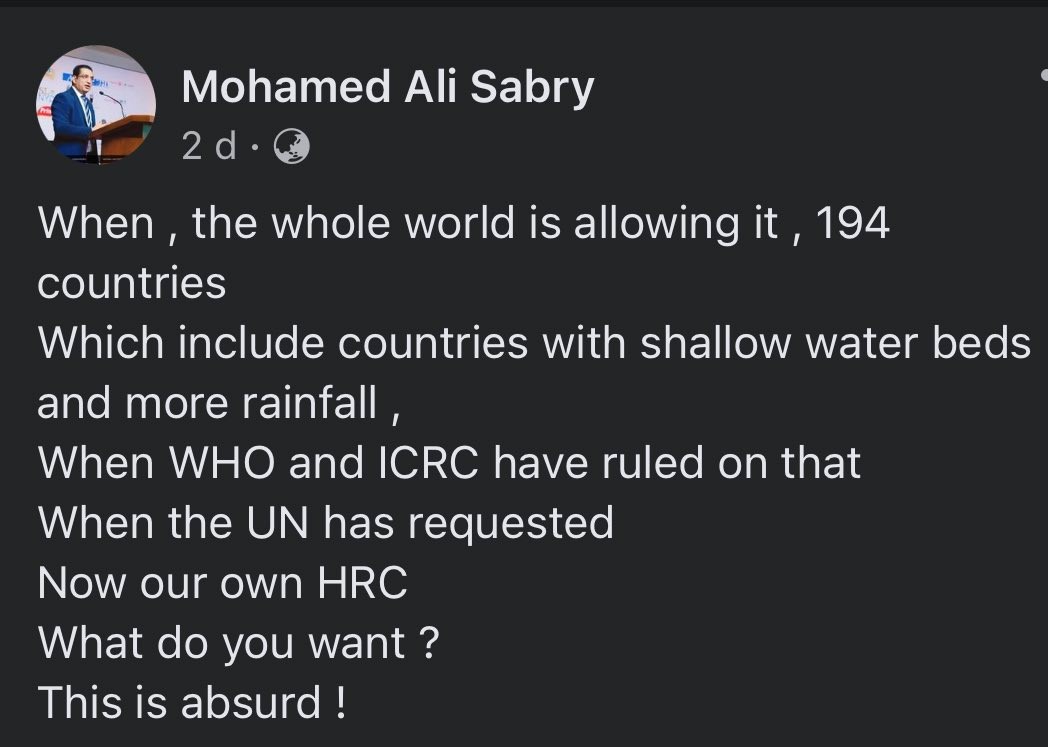
Image: A FaceBook post by Sri Lanka’s Minister of Justice which says mandatory cremation of Muslim Covid victims is absurd.
In a series of tweets, a former member of Parliament Ali Zahir Moulana says that Rs. 60,000 were demanded from some families for the coffin and ash of the cremated covid victims in Sri Lanka.
“In the case of the 3 Muslim COVID19 deaths which occurred yesterday (28) – 2 from Slave Island & 1 from Maligawatte, the families were forcibly demanded of their consent to cremate & an exorbitant sum in excess of Rs. 60,000 each in cash allegedly for the “coffin and ash”.
“The 3 families refused to give their consent to cremate nor part with such an exorbitant sum of cash which they couldn’t afford. The police were then called, and despite immense hostility & harassment the families remained resilient and left – a first which didn’t happen before.”
“Why are these unfortunate families subject to such harsh treatment ? How many destitute families have been swindled & harassed in the name of racism, all while struggling over the tragic loss of their loved ones & then forced to witness them being cremated against their wishes?”
Meanwhile, Justice Minister All Sabry says that mandatory cremation of Muslum victims of Covid 19 is absurd.
He has come under fire from Sinhala extremist members of the cabinet and Alt-Buddhist monks.
… some shipped in without opening LCs, EU wants restrictions abolished
By Shamindra Ferdinand-November 27, 2020
The majority of the luxury vehicles imported by special permit holders in contravention of the import ban imposed by the government in view of precarious economic situation caused by corona first wave are likely to be released subject to penalties.
Well informed sources said that those vehicles shipped in without even opening LCs would be released. Among the violators were many government servants.
Sources said that vehicles brought in without opening LCs were likely to be confiscated.
“We have categorised over 300 vehicles, including BMWs, Mercedes-Benz and Audis into two groups. Customs are now in the process of evaluating individual cases,” a high ranking state official said.
The government announced a ban on vehicle imports to arrest the depletion of foreign reserves. Sources acknowledged that at the time the vehicles
arrived in Sri Lanka the second corona wave hadn’t erupted. The situation was far worse now and further deteriorating, they said, adding that the Customs were being inundated with requests for releasing vehicles on sympathetic grounds.
Controversy surrounds the failure on the part of the government to strictly implement the import ban in view of the sharp drop in state revenue due to the pandemic.
Recently, the EU demanded that Sri Lanka immediately lift import ban or face the consequences. The EU issued the warning in talks with government representatives. Foreign Minister Dinesh Gunawardena explained the circumstances that compelled the government to impose import restrictions. The EU sought an explanation as to when the ban would be lifted. The Foreign Ministry quoted Foreign Minister Gunawardena as having explained to the EU the challenges Sri Lanka economy was facing amidst the dwindling foreign currency reserve situation due to the significant reduction in remittances and tourism revenue induced by the COVID-19 global pandemic. The minister said that the import restrictions were being reviewed.
Among many factors affecting the development of the country adversely, one factor that has been constantly overlooked by both politicians and economists alike is the lack of wealth preservation and accumulation in the country. What is this wealth accumulation?
Government constructions are also in dismal condition. They often do not last long and also run the risk of being obsolete even before the completion of the construction – Pic by Shehan Gunasekara
Have a deep look out of your window, and inquire as to how many constructions will last beyond next 50 years. It is very likely that almost all the buildings, except a few, will have to be demolished and rebuilt again in few decades. A handful of buildings in major cities might just stand the test of time for several more decades, but the situation in rural areas is hopeless. What does this mean, and why it matters? The wealth accumulation is woven to a healthy and growing economy as much as the gravity is woven to our existence.
Ordinary citizens work, earn and build houses. This is the process of generating wealth. From the perspective of economics, they trap a large part of their wealth in buildings. If the buildings that they build do not last beyond a few decades or have to be renovated substantially, their wealth and material legacy will completely vanish in a few decades.
The buildings may have to be demolished for reasons of structural unsafety or simply that they are not fit for the current purpose. The next generation has to build again for their needs at a significantly higher cost. There is no wealth accumulation in this process. We can explain this further using an example.
Think about a hypothetical scenario where your parents have built a house spending their entire wealth and passed it to you. However, you consider that it is not fit for your purpose. If you build a new house at the same location after demolishing the tired house, you will not only erase your parent’s legacy, but also destroy the wealth of the nation.
If you leave the old house intact, and build a new house elsewhere, you could preserve the wealth. If the first house is not for your purpose, you can simply sell it. As long as it is intact and can be used by some other family, no significant wealth destruction occurs. This sentiment is straightforwardly valid to Government constructions as well.
What is the role of the Government in this process to preserve the wealth of the nation? The wealth generation is done by the citizenry, but the duty of care obligation for wealth preservation/accumulation exclusively falls upon the Government. The wealth preservation/accumulation is however something much more than building to last.
Among many things to do, certainly what the Government should not do is to use any heavy-handed approaches like prohibiting people from demolishing houses and forcing them to live in old dilapidated houses. That is absolutely not helpful for a free society. The Government should instead use more graceful approaches such as introducing minimal standard for private constructions, making timeless architecture easily available to people, making buying and selling houses and lands hassle-free, promoting moving houses, and property repurposing.
Currently, Government constructions are also in dismal condition. They often do not last long and also run the risk of being obsolete even before the completion of the construction. The planning process should be thorough and ambitious, and more importantly include a funding mechanism for the maintenance of these constructions. If need be, a statutory framework should be formulated tto fund the maintenance of key constructions. There are several key areas where the attention is urgently needed.
Sri Lanka has now become a remittance economy. Since 2005, people who seek foreign employment have exponentially increased, and majority of them are women from rural areas. As of 2019, Sri Lanka has been receiving personal remittance over $ 7 billion per year from these employees.
The obligations of the Government should extend beyond just giving rupees for migrant workers’ foreign currencies, and should include duty of care obligations such as introducing wealth preservation/accumulation methods for these migrant workers. If the Government will not be able to create a wealth preservation/accumulation program soon at least for migrant workers, it is nothing short of a historical crime against these voiceless people.
With the Budget 2021, the current Government is planning to kick-start the remittance economy version II by facilitating non-residents to buy super luxury condominiums in Sri Lanka utilising earnings in foreign countries or a loan obtained from banks outside Sri Lanka. The Government should do more to make sure that these luxury apartments last long for many generations to come in order to witness the true benefit of these foreign investments.
Currently, Lakvijaya coal power plant generates 18% of the country’s energy burning 2.25 million tons of coal per year. Burning four to eight tons of coal produces one ton of coal ash, of which about 39% is fly ash. The air-borne ash particulates from the plant have been monitored even in Colombo. For a small country in terms of the land area, this will one day be a source of an environmental and health disaster on an unprecedented scale.
The Government should devise a plan to preserve and accumulate the wealth created by the power plant. Once the level of wealth created is reasonably sufficient, the operation of the power plant should be gradually roll-backed.
Following the global start-up trends and entrepreneurial economic models, we see promising initiatives such as the recently-launched, US-led ‘Sri Lanka@100’ to promote people-led economic development in Sri Lanka.
These programs will certainly mobilise energetic and industrious people for wealth generation, and will provide employments to many. It is however not clear the long-term benefit of this type of programs to the nation without proper wealth preservation/accumulation procedures in other parts of the economy.
[The writer currently leads a research team in Dublin, Ireland. He has also held full-time appointments in School of Engineering at University of Edinburgh-UK and Division of Global Investments at Aberdeen Standard Investments (ASI) – the largest active asset manager in UK. He was a graduate from Faculty of Engineering at University of Peradeniya with first class honours. Contact: dushyantha.basnayaka@gmail.com]
By the beginning of the 19th Century, when the British took over Ceylon from the Dutch, laissez-faire was being accepted as the ideal in Britain and Europe. It was based on free trade with the market determining economic decisions. Mercantilism, which was based on protectionism, was on the way out. However, the European powers decided that the principles of a liberal market economy should not be applied to their colonies. Political economists of that era believed that “good, stout despotism” was necessary where “civilization had not reached a high level of development.”
Since the colonial powers believed that the people of the colonies did not merit the enlightened economic and political systems of the West, the principal function of their administrations in the colonies was not the promotion of political and economic development towards modernity and prosperity, but the collection of revenue from the colonized.
Though by the beginning of the 19th Century, when the British took over the island from the Dutch, laissez-faire was accepted as the ideal in Europe, the British in Ceylon were against the introduction of free trade on the plea that the civilization here had “not reached a high level of development,” and that what the people needed was “good, stout despotism.” This theory was used to brazenly deny welfare and make exploitation of local human and natural resources for the exclusive benefit of the British. Concomitantly, collection of revenue rather than economic development of the indigenous population became the principal aim of the colonial regime.
Decisions taken in Colombo and London on land, taxation, labour and monopolies were, in essence, a throwback to the “old and inveterate system of oppression” that characterized Dutch and Portuguese rule in the island, says Prof.P.V.J.Jayasekera in his book: Confrontations with Colonialism, 1796-1920 Vol I.
Right from 1796-98, the British authorities in London had set revenue targets for Ceylon. There was hardly any interest in rendering services to the people from whom the surpluses were exacted. Road-building was a major activity in the 19th century but it was not undertaken to benefit the locals but to serve British commercial interests centred around a burgeoning plantation economy.
Earlier in 1849, the government had offered to give funds for irrigation development but these had to be paid back with interest in addition to providing free labour for the government’s public enterprises which were mostly infrastructure work for the benefit of British interests.
Prof. Jayasekera points out that in the traditional administrative system, the emphasis was on the maintenance and improvement of agriculture and irrigation and not only surplus extraction. The British justified their control over the land saying they were only following a tradition in which the Kings had over-lordship over land as Bhupathis or Pruthivirajas. Under Rajakariya, the King granted land to peasants in exchange for services. The services expected were for public works like irrigation facilities. Special services were elicited based on a person’s caste-related occupation. But the British disallowed any assertion of customary use of, and title over, land. Jayasekera points out that this was totally against the 1815 Kandyan Convention the British had entered into with the Kandyan chiefs. The document had explicitly stated that the people’s customary rights would be protected by the new British rulers.
In 1801 Ceylon’s first British Governor, Fredrick North reasserted the governments’ right to both categories of Rajakariya services but he introduced a direct tax on the produce of the land. The peasantry resented this. While under the Kings Rajakariya labour was used for irrigation works, the British used the system for their military needs and commercial agriculture. With the result, rice production declined to 50% of the requirement, and imports increased three-fold, Prof. Jayasekera says.
“The precarious of returns in agriculture led to peasants going in for share-cropping, giving half the produce to the landowners. The land was being mortgaged at 25 to 50% interest,” he points out.
The British monopoly of cinnamon production and sale (until it was abolished) had deprived the peasant of a lucrative market in the West. Duties were imposed solely to benefit the British. Duties on imported British goods were slashed by 50%. Rice and cloth imported from India which were used by the masses were taxed 8 to 12 %. Export duties on tobacco and arecanuts deprived the Ceylonese peasant of the large Indian market. To promote British shipping, goods brought by non-British ships were taxed 50% extra.
Free land was given to Europeans and Burghers for the cultivation of commercial crops like coffee, cotton, indigo and sugarcane. The tax exemption was given for 5 to 10 years for these enterprises. Their workforce was also exempted from Rajakariya obligations. With the plantations becoming money-spinners, planters and civil servants propagated the notion that paddy cultivation was a waste and did not deserve government encouragement, and the Governors agreed.
One of the reasons why the plantation economy boomed was that the British bureaucracy was part of it as investors. Even Governors invested in the plantations. When a legislature was set up, planters and British merchants were represented significantly. Planters’ interests were also strongly represented in the British government. According to Prof.Jayasekera, the 19th Century colonial State in Ceylon was more powerful than it was in India because of the dominance of the British-controlled plantation economy on the island. The “draconian” Land Ordinance 5 of 1840 was based on the theory that all land belonged to the Crown unless they had been granted to someone earlier. This opened the floodgates to land grabbers and planters, a motley crowd of Whites including civil servants and Governors. Unauthorized local holders of land were sent to jail or fined. This was one of the causes of the 1848 rebellion which had to be put down with the use of brute force. A parliamentary committee went into the causes of the 1848 uprising but it made no difference.
Prof. Jayasekera says that contrary to British propaganda that labour had to be imported from India because the Sinhalese were “indolent”, was false. The Sinhalese worked in the plantations when wages were adequate. For example, in 1890, there were 18, 000 to 23,000 Sinhalese peasants working in the plantations.
However, the use of Sinhalese labour ceased when cheap Tamil labour from the famine-stricken districts of Madras Presidency was available in abundance. The British-governed Madras collaborated by neglecting agriculture and forcing peasants to go to the colonies to work in British plantations.
Israeli forces demolish historic stairway which leads to the Al-Aqsa Mosque's Lions' Gate. (Photo: via Social Media)
November 30, 2020
The Israeli Jerusalem Municipality yesterday demolished a historic stairway that leads to the Al-Aqsa Mosque’s Lions’ Gate (Bab Al-Asbat) and the Old City of Jerusalem.
The head of the Committee for the Preservation of Islamic Cemeteries in Jerusalem, Mustafa Abu Zahra said the Jerusalem Municipality’s teams, accompanied by a bulldozer, stormed the Bab Al-Asbat area and demolished the stairway leading to the Yusufia cemetery.
According to Abu Zahra, the demolition is part of the Israeli authorities’ plan to establish the “Biblical garden path” inside the cemetery which contains the Tomb of the Unknown Soldier, as well as many ancient and modern graves.
The cemetery is about 4,000 square meters.
Abu Zahra called on all Jerusalemites to “unite in order to protect Jerusalem’s landmarks from the Israeli occupation’s oppression”.
The Israeli occupation’s municipality in Jerusalem did not comment on the demolition.
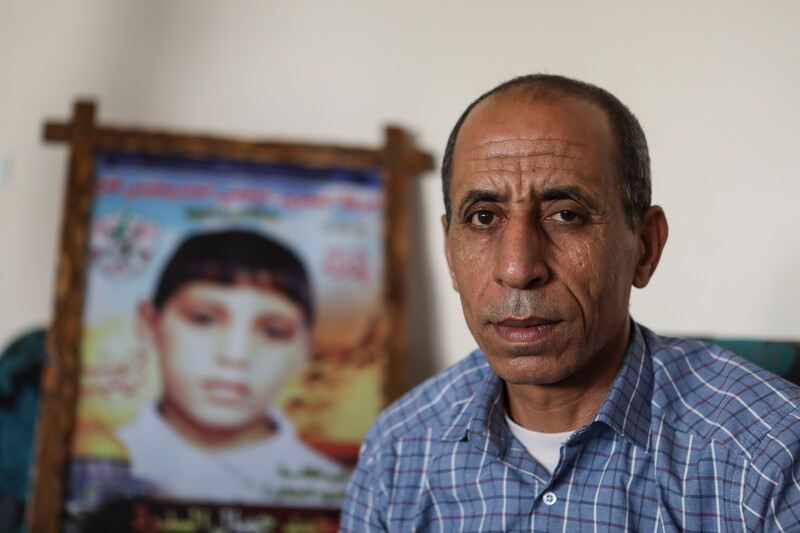
Jamal al-Dura still vividly remembers the day his son was killed by the Israeli military. Mohammed Al-Hajjar
Amjad Ayman Yaghi -30 November 2020
Somewhere, in the heart of Bureij refugee camp in the central Gaza Strip, Jamal al-Dura looks at a picture of his son, Muhammad.
Like other bereaved parents, the 55-year-old former construction worker will never get over the loss of his child.
Unlike other bereaved parents, Jamal also has to live with constant reminders in the media or from strangers.
It is now 20 years since the killing of Muhammad al-Dura was caught on camera.
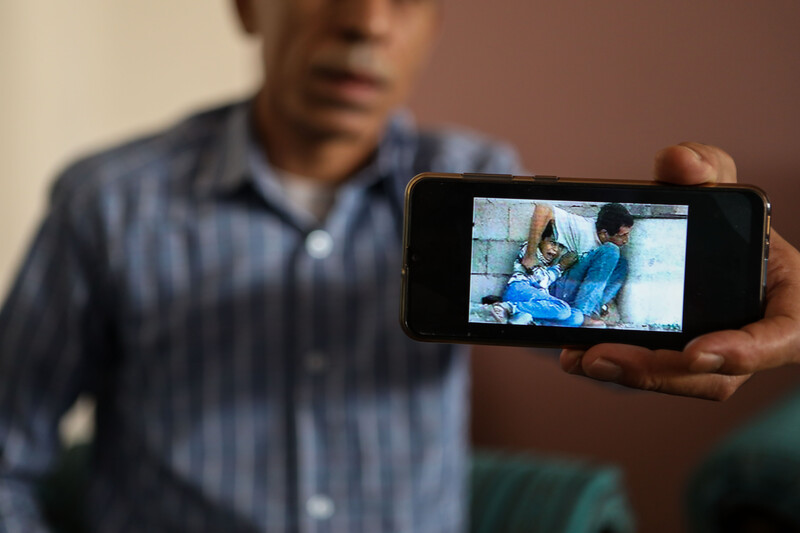
And the footage of the 12-year-old boy, crouching behind his father’s desperate but ultimately futile attempts to protect him, provided some of the defining images of the second intifada.
The images still resonate today, not least in Gaza, isolated and besieged as it.
Those pictures serve as painful symbolic reminders that – even as the UN calls, yet again, for an end to an Israeli blockade on Gaza that has seen over half the population there fall below the poverty line – Palestinians are without protection against an Israeli occupation that is brutal and relentless.
Jamal still vividly remembers that fateful last day of September in 2000.
He and his son, who loved cars, had gone to look at used cars at a market east of Gaza City.
The plan had been for Muhammad to choose a car he liked for the family, Jamal told The Electronic Intifada. But neither could find anything appealing so they made their way back via the Netzarim junction, a military checkpoint in Gaza, then serving the Netzarim settlement of some 60 Israeli families, that cut Gaza’s north from the rest.
Defamation and lies
There were demonstrations at the junction that day. This was just a few days after then Israeli opposition leader Ariel Sharon had decided to take a highly provocative walk on al-Aqsa Mosque compound in occupied East Jerusalem.
Sharon’s aggressive conduct sparked an intifada that had been brewing as the failure of the Oslo accords to deliver a genuine peace was becoming clearer.
Jamal and Muhammad’s taxi driver decided that he couldn’t go further, and father and son began to walk a short distance to catch a cab to take them home to Bureij camp, which was on the other side of the checkpoint.
But as they were walking, the shooting came closer.
“I grabbed Muhammad and hid behind a barrel,” Jamal said.
His intention was to stay out of the way until the shooting ended. But the shooting caught up with them.
The rest was caught on camera by journalist Talal Abu Rahma, who was working with Charles Enderlin of France 2, a state-run TV channel.
Jamal al-Dura still carries on his phone the pictures that went global of the day his son was killed behind him.
Mohammed Al-Hajjar
The graphic and tragic scene of a boy shot dead behind his unconscious father made global headlines. The Israeli military did not contest its authenticity, in fact issued a qualified apology.
But five years later, after pro-Israeli conspiracy buffs had muddied the waters by suggesting either that the shooting had been staged by Palestinians or that the boy had died of Palestinian gunfire, the military retracted that apology.
No evidence has ever been presented that suggests anything other than that the boy was killed exactly as originally understood, and neither Abu Rahma nor Enderlin, himself the grandson of Austrian Jews who fled ahead of the Nazi invasion in 1938, ever expressed any doubts about what they broadcast.
Indeed, in 2013, after several rounds in court and an appeal was quashed, a French court ruled that one such conspiracy buff, Phillipe Karsenty, chief of the pro-Israel organization Media Ratings, was guilty of defamation for accusing Enderlin and France 2 of staging the shooting.
No justice
To Jamal, all of this simply added to his pain. Not only was his son killed right behind him, he also had to deal with “skeptics” who only opened wounds when they attempted to sow doubt around what had happened.
And finally, of course, there has been no justice for his son. No one has ever been held to account.
Jamal wants to go to France to fight his own court case against Karsenty, he told The Electronic Intifada, as part of an attempt to reignite interest in his son’s killing internationally.
He also wants the Palestinian Authority to take Israel to the International Criminal Court over his son.
Unemployed now, and relying on social security from the PA, he is still receiving physical therapy for the injuries he suffered that day. But, he said, the PA has not been helpful toward his ongoing endeavors to keep the case alive.
It puzzles him.
The murder of his son, he said, may not be the “most heinous crime committed by the occupation … but it is fully documented.”
“It demonstrates the most horrible side of humanity, where no mercy is shown to a child and a father is trying to protect his son.”
The family, like all families in Gaza, have had other hardships to contend with. Since Muhammad was killed, Gaza has been the scene of three devastating Israeli military assaults in 2008-09, 2012 and 2014.
In the first of those, the Dura home was bombed. Jamal remembers getting a call in the middle of the night, and someone telling him to evacuate the house in five minutes.
“I told them, ‘are you crazy, in five minutes? I have kids at home,’” Jamal told The Electronic Intifada. He tried to stall as long as possible while his wife, Amal, got the children out of the house.
Finally, the person at the other end of the line lost his patience and yelled at him to get out in no more than 15 minutes.
“This is the IDF [Israel’s military], we’ll bomb the house over your head,” Jamal said he was told.
“We went out to a house near us and warned the neighbors. Then we heard a warning missile dropped by a plane, and then the house was bombed.”
The family of 10 rebuilt the home. But in the 2014 assault, the house was also damaged, this time strafed by tank shells.
Again, the family had to rebuild.
Amal, Muhammad’s mother, says she cannot understand how it is that Israeli mothers keep sending their children to fight in Gaza.
“Your country is democratic. How do they force your children to go to Gaza to start wars and to establish barriers around Gaza and the West Bank?” Amal said, addressing Israeli mothers.
“If you really love your children, let them stay home. Every war kills many like Muhammad.”
Muhammad should have been in his thirties now.
Despite his son’s death, Jamal once again took out Muhammad’s pictures on his birthday this year, as he has done every year since 2001.
Jamal imagined another world in which his son was alive and married with his own children.
While the Emirates are interpreting the return of Palestinian envoys as acceptance of Gulf deals with Israel, the Palestinian Authority hangs its hopes on Biden
Add caption
From left, Bahrain Foreign Minister Abdullatif al-Zayani, Israeli Prime Minister Benjamin Netanyahu, US President Donald Trump and UAE Foreign Minister Abdullah bin Zayed al-Nahyan hold up signed agreements at the White House, on 15 September 2020 (AFP)
On Thursday, Emirati Foreign Minister Anwar Gargash expressed his country’s optimism over the recent decision by the Palestinian Authority (PA) to resume diplomatic contacts with his country as well as Bahrain, seeing it as a sign that Palestinian leadership was slowly coming to terms with the so-called Abraham Accords.
The controversial US-sponsored agreement signed in September established official diplomatic relations between Israel and the two Gulf countries, reportedly in exchange for a freeze of Israel’s annexation of Palestinian lands. Its announcement sparked controversy across the Arab world and was vehemently rejected as a “stab in the back” by Palestinians, who quickly recalled their envoys from Abu Dhabi and Manama.
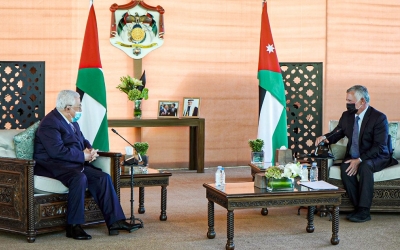
Jordanian and Palestinian leaders pin hopes on Biden reviving two-state solution
“I am optimistic about the Palestinian’s decision to look at this [the Abraham Accords] in a more sober and rational way,” said Gargash, addressing an online talk during Med2020, an international forum organised by the Milan-based Institute for International Political Studies.
“The Palestinians recognise this is a major change… The initial angry statements have made space for more sober assessments,” he continued. “Their decision to re-engage with us and with Israel brings us back to the old adage that if you are not there, you have already lost 80 percent of your case.”
But the Emirati official’s statements have been rebuffed by PA Foreign Minister Riyad al-Malki, who has replied with visible irritation that the Emiratis “are dreaming” and that the normalisation agreements would collapse once their major sponsor, outgoing US President Donald Trump, leaves the White House.
“Our decision to reopen the missions in the UAE and Bahrain has nothing to do with a supposed acceptance of the accords,” Malki told Middle East Eye from his office in the occupied West Bank city of Ramallah. “We are not warming up to the idea [of the accords] at all. In fact, we think that they will soon be dead.
“However, we acknowledge that the situation at the White House has changed and we are ready to re-engage now with those willing to help us,” he added.
While Palestinian leadership appears to base many hopes on changes in the US, analysts however warn that the tide of normalisation between Israel and Gulf Arab states may be far from over.
Hopeful for a Biden presidency
After Joe Biden’s victory in the US presidential elections in early November, the PA sent back its envoys to the two Gulf countries a couple weeks later, hopeful that Washington will soon return to more orthodox positions on the Palestinian question.
Meanwhile, the PA also resumed its security coordination with Israel in the occupied territories, following a six-month suspension in response to Israel’s plans to annex more land in the West Bank in contravention of international law. The return to this controversial policy has triggered criticism from the Palestinian public, as well as from Hamas, the longtime political rival of the leading party in the PA, Fatah.
In the wake of the Gulf normalisation announcements, the PA had in fact severed ties with Israeli intelligence and pivoted towards Hamas in a bid towards Palestinian unity against the threat of Arab defection from the Palestinian cause. The two parties were due to meet in Cairo to set a date for presidential and parliamentary elections, but Hamas boycotted the meeting, Malki said.
'We listened to the statements made by the new US administration and we feel we can work with them'
- Palestinian Authority Foreign Minister Riyad al-Malki
In an attempt to explain such a quick change of strategy after attempting reconciliation with Hamas, Malki said that by resuming cooperation with Israel, the PA was signalling to Washington that it was ready to seriously re-engage with the US and Israel in peace negotiations without preconditions, based on the Arab Peace Initiative and the UN resolutions.
“We listened to the statements made by the new US administration and we feel we can work with them,” Malki said. “We have had indirect contacts with the new administration and we hope that after 20 January we shall be able to re-engage again and also see if it will be possible to renew direct negotiations with Israel.”
In early November, Vice President-elect Kamala Harris said the new presidency would be committed to a two-state solution, and oppose any unilateral steps that undermine that goal - including Israeli annexation and settlement expansion, both of which are illegal under international law. The statement raised hope among Palestinians that the new administration would definitely archive Trump’s so-called "deal of the century".
Harris pledged to reverse Trump’s decision to cut funding of critical UN aid agencies supporting Palestinians - notably the agency for Palestinian refugees UNRWA - as well as restore the Palestine Liberation Organisation (PLO) mission in Washington and reopen the US consulate in occupied East Jerusalem.
“Normalisation of ties should come after, and not before, Israel’s withdrawal” from occupied Palestinian territories, said Malki. “[Israeli Prime Minister Benjamin] Netanyahu has convinced Trump of the opposite, and both have pursued the Abraham Accords for electoral reasons, but in the case of Trump it has not paid off. We hope the new US administration will erase Trump’s legacy, including these accords.”
But the incoming Biden administration has yet to clarify whether it will also backtrack on US recognition of the entire city of Jerusalem as the capital of Israel and the moving of the US embassy to Israel there - decisions by Trump which had marked a stark departure from international diplomatic consensus.
Headed for disappointment?
While Malki expressed strong hopes for changing American tides in 2021, it remains highly unlikely that Washington will withdraw support from Israel’s efforts at normalising relations with some Arab states, a process long in motion.
“The Biden administration will likely support further deals between Arab states and Israel,” Joost Hiltermann, programme director for the Middle East and North Africa region for the International Crisis Group, told MEE. “But it may also insist on a return to previous terms of Israeli-Palestinian peacemaking, and encourage linkage between progress on the latter front with normalisation of relations between Israel and Arab states.”
Palestinians should be 'happy' about normalisation, says UAE's al-Otaiba
Last month, Sudan became the third Arab country to normalise ties with Israel this year after Trump took the country off the US blacklist of state funders of terrorism. Trump and his administration have repeatedly claimed at least five more Arab states were ready to sign the deal, including Saudi Arabia.
“Israel has interest in continuing to improve relations with Arab countries in the Gulf and so do the Gulf countries who see Iran as a threat,” said Robbie Sabel, academic and expert of international law at the Hebrew University in Jerusalem. “The Gulf countries will not join because they like Israel or because they really think they can advance the Palestinian cause, but for their own interest.”
Sabel said Gulf States would prioritise their own strategic and security interest, but while doing so they would try not to harm Palestine. “I don’t think any Arab state would work against an improvement of the Palestinian cause,” he said.
Key business and strategic opportunities
This year’s normalisation efforts have seemingly flown in the face of the 2002 Arab Peace Initiative, which stated that the establishment of formal diplomatic ties with Israel would only take place after Israel’s full withdrawal from the occupied Palestinian territories and the creation of a sovereign and independent Palestinian state within the pre-1967 lines with East Jerusalem as its capital.
Saudi officials have repeatedly stated that the kingdom remained committed to the peace initiative it drew up in 2002 - amid seeming disagreement between Crown Prince Mohammed bin Salman, who reportedly met with Netanyahu earlier this month, and his father, King Salman.
But Palestinian hopes clash against reality on the ground. The Abraham Accords are proving very advantageous for Emirati leadership, and other Gulf countries may look at normalisation deals as offering key business and strategic opportunities.
Israeli normalisation: Quashing the Arab dream of liberation
The UAE has gained important military concessions, buying long-coveted F-35 jets from the US and openly pursuing intelligence-sharing and cyber-security cooperation with Israel after decades of undercover contacts, as admitted by Gargash himself.
“The relationship with Israel has developed in small incremental steps over the years,” Gargash has said. “We had a window of opportunity to normalise ties last June and we took it. I think if not this year, it would have happened anyway, next year or the other.”
Gargash added that the UAE deal with Israel is different from the ones the latter has with Egypt and Jordan, who share borders with Israel and have war wounds to heal: “We start with a clean slate and this will help [Palestinians] as well… Our peace will be a warm peace.”
Experts argue that if the UAE had a genuine interest in supporting the peace process, it would not have made concessions to Israel without anything in return.
“The UAE could have asked for Israel's agreement to negotiate with the Palestinian leadership by the terms of the Arab Peace Initiative. They had leverage to do so,” said Hiltermann. “If the UAE was genuinely interested in peace-making, they would refrain from supporting one faction in the Palestinian National Movement.”
Hiltermann referred to Mohammed Dahlan, a former Fatah security official who is a rival of PA President Mahmoud Abbas and who is currently exiled in the Emirates. A close friend of de facto Emirati ruler Mohammed bin Zayed Al Nahyan, Dahlan has been rumoured to be one of the architects of the Abraham Accords. In the wake of the signature of the normalisation deals some members of his faction, the Democratic Reform Current, were arrested by PA forces in the West Bank.
Some observers have also questioned whether Dahlan and his Gulf sponsor will have a role to play in the succession to 84-year-old Abbas to the presidency of the PA.
In the context of a weakening international system, where fragmentation and national interests prevail over multilateralism, the UAE has shown its readiness to take matters in its own hands and play a role that would suit its goals. This may bear consequences for the future of Palestine as well.
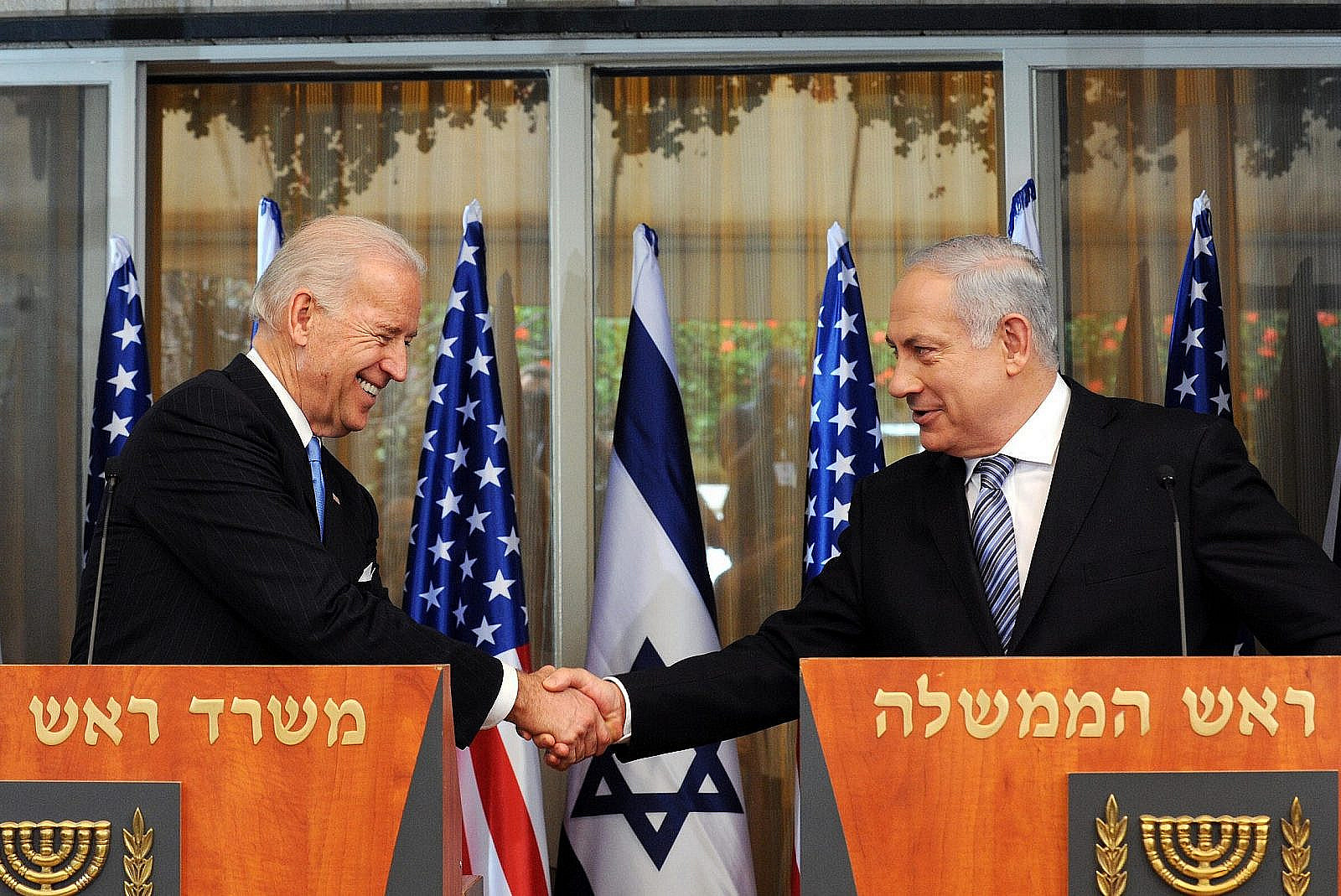
On Aug. 31, 1973, Joe Biden, then a young Democratic senator not even a year in office, met with Israeli Prime Minister Golda Meir. Although Biden has publicly reminisced numerous times about their encounter , he has rarely, if ever, mentioned that he had told Meir — according to an official Israeli record of the meeting recently published by journalist Nadav Eyal — that “he sees the platform of [Israel’s] Labor Party as creeping towards annexation of the [Palestinian] territories.” At the time, there were only about 1,500 Jewish Israeli settlers across the Green Line.
Thirty-seven years later, on March 11, 2010, Biden gave a speech at Tel Aviv University as Vice President under Barack Obama. In a direct appeal to the Israeli public — during which he again reminisced on his 1973 meeting — Biden warned that “the status quo is not sustainable. It’s no secret the demographic realities make it increasingly difficult for Israel to remain both a Jewish homeland and a democratic country in the absence of the Palestinian state.” By that point, the population of Israeli settlers in the West Bank had grown to 311,000 — roughly 200 times the number since Biden spoke with Meir.
Ten more years passed. Biden, now the President-elect, said the following half a year ago on the campaign trail: “I do not support annexation. Israel needs to stop the threats of annexation and stop settlement activity because it will choke off any hope of peace.” According to official Israeli data, the number of settlers in the West Bank — without even counting some 200,000 living in annexed East Jerusalem — surpassed 441,000 last year, 40 percent more since the TAU speech.
Saying the quiet part out loud
It is worth juxtaposing the clarity of what Biden said, in private, in 1973 with the position stated, in public, in 2010. What Biden recognized correctly nearly 50 years ago — that Israel would make the occupied Palestinian territories its own — has indeed been realized. Through relentless, steady, brutal policies and actions, consecutive Israeli governments have brought about further dispossession, demolitions, and forcible transfer for Palestinians, while in tandem, bestowing their confiscated lands and homes to Jewish Israeli settlers.
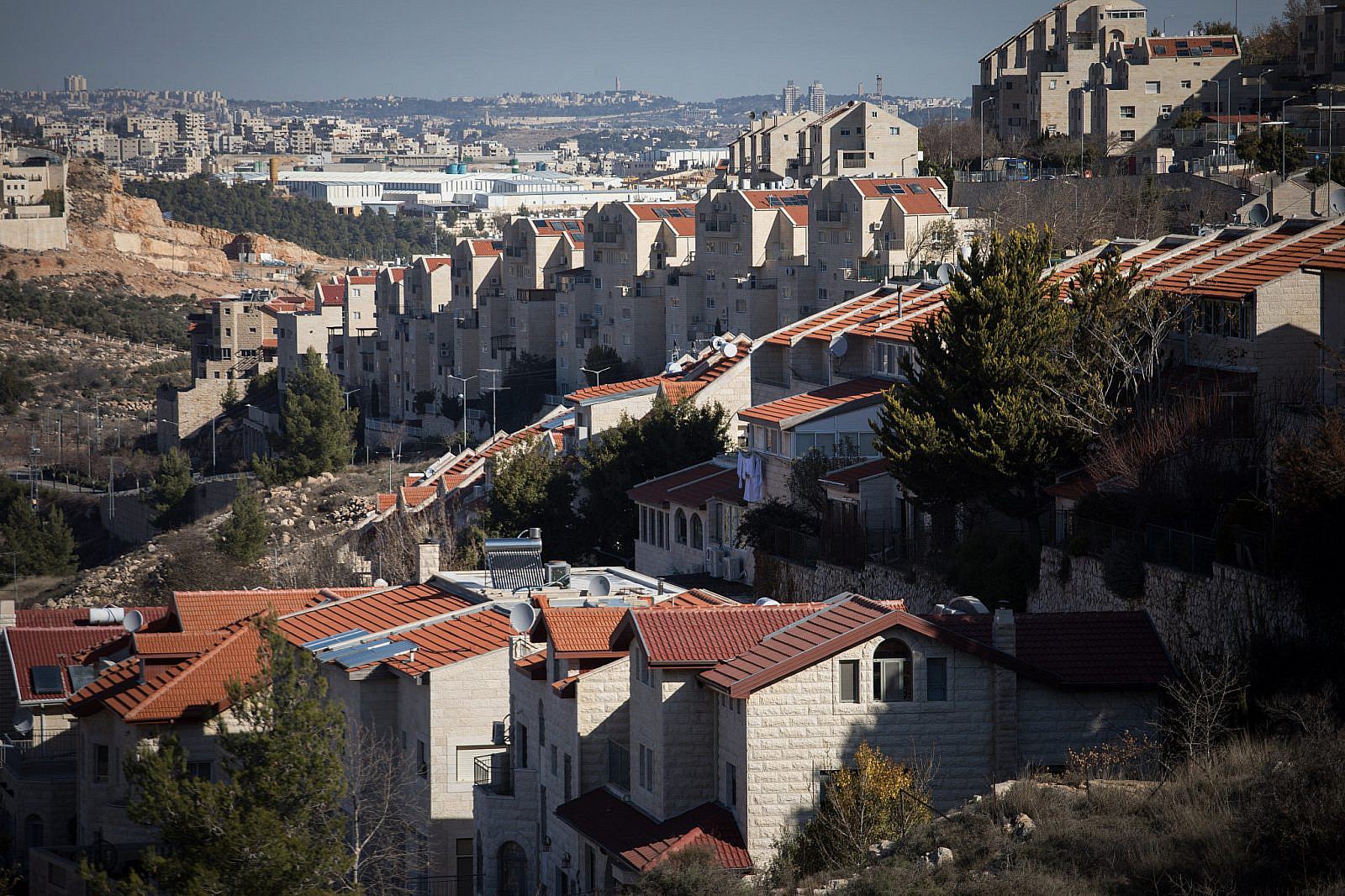
View of the Jewish settlement of Efrat, in Gush Etzion, West Bank. January 6, 2020. (Hadas Parush/Flash90)
Biden was wrong about one thing, though: the so-called “status quo” — a reality of endless theft of Palestinian land, life, and liberty — was, and apparently still is, very “sustainable.” Yet that sustainability is not God-given, nor does it exist in a vacuum: it is sustainable because it is underwritten by U.S. foreign policy.
Biden’s persistent claim that he “does not support” annexation, while it has in effect already happened, amounts to nothing but empty rhetoric. It is the same empty rhetoric that describes Israel as a “Jewish” and “democratic” state, even though it has been neither for decades. Rather, Israel is a one-state reality with demographic parity between Jews and Palestinians, inherently undemocratic as millions of Palestinians are systematically disenfranchised.
This chorus of futile words, echoed for years by both Democrats and Republicans, set the stage for the policies of Donald Trump, Jared Kushner, and David Friedman. Israel’s open consideration of de jure annexation is not a dramatic departure from its previous path: it is the natural extension of a reality that was long accepted and tolerated by the international community, first and foremost by the United States. The launch of “Deal of the Century” in January 2020 simply spelled out this reality: Israel’s control over the entire area and all the people between the Jordan River and the Mediterranean Sea is permanent.
Thanks to Trump’s tendency to say the quiet part out loud, the pre-existing fault lines that have long been obscured in Israel-Palestine have become more evident. Before Trump, American presidents shielded Israel from international consequences while paying lip service to a negotiated solution with the Palestinians, even as unilateral facts on the ground devoured the very issues that were supposed to be negotiated. With Trump, that lip service ended, and the president openly backed the occupying power’s vision of a Greater Israel in which millions of Palestinians are forever disenfranchised.
So, what will happen after Trump?
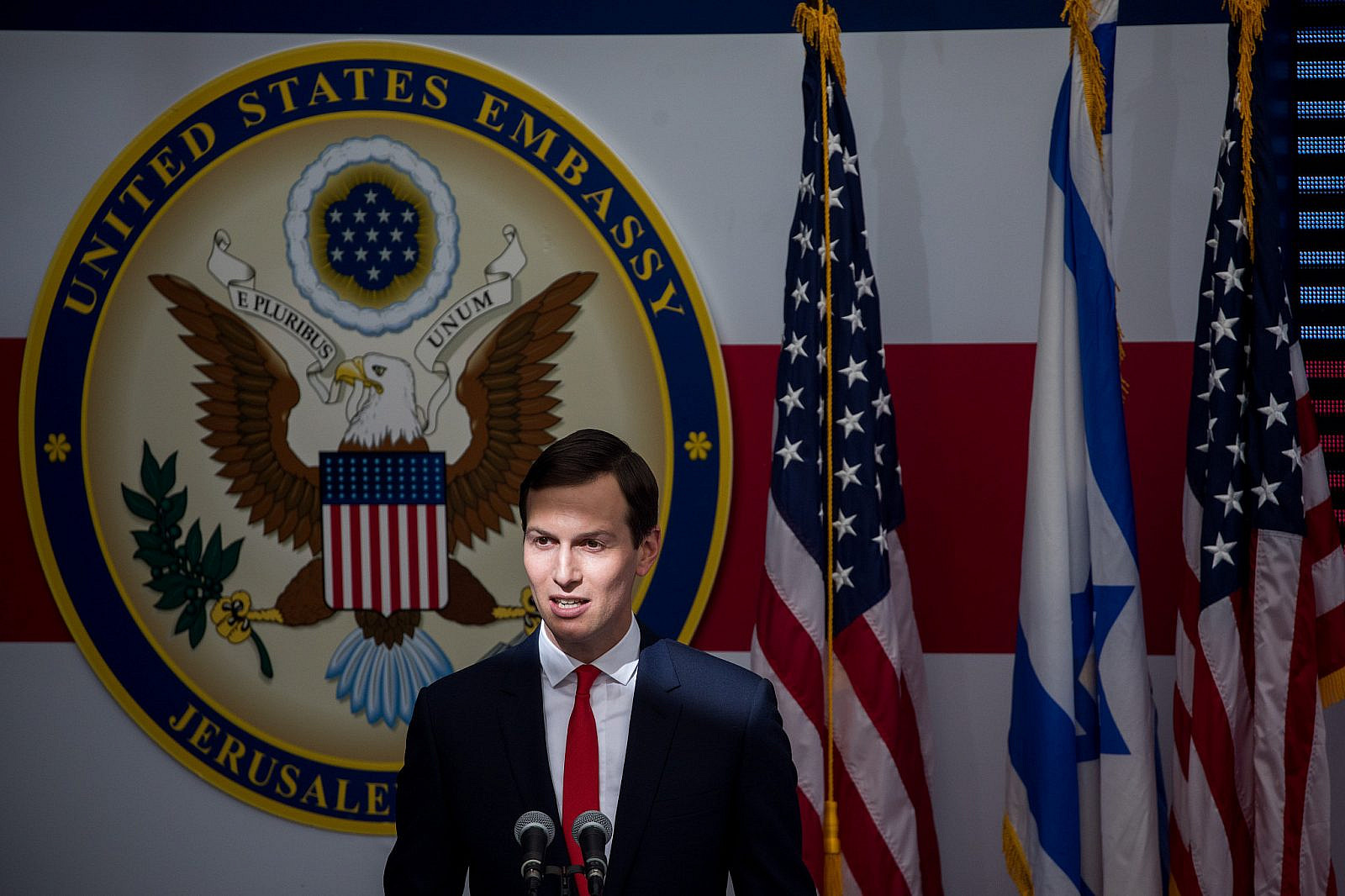
Senior Advisor to the U.S. President Jared Kushner speaks at the official opening ceremony of the U.S. embassy in Jerusalem, May 14, 2018. (Yonatan Sindel/Flash90)
The 51st state
When Biden steps into the White House in January, he will be entering an era in which Washington is redesigning its involvement in the Middle East, a fact that is already informing strategic developments in the region. This process has paved the way for Israel and other autocratic Arab states to swap the prospect of de jure annexation with the familiar, ongoing reality of de facto annexation and occupation over the Palestinians, bundled with some arms deals for Israel’s friends.
In this “New Middle East,” there is room for visa-free travel for the people that count in the region (Palestinians need not apply; they should instead be thankful for the modernized checkpoints to be allocated to them, courtesy of the United Arab Emirates), and there is room for “prosperity” (for those willing to check their dignity and rights at the door). There is no room for humanity, justice, or freedom.
The bandwidth for Biden’s foreign policy in general, and for Palestinians specifically, will likely be limited as Washington focuses on the many urgent issues left broken by the outgoing administration. But limited bandwidth or not, Biden cannot wash his hands from what Israel is doing to the Palestinians.
What transpires in Palestine is the result of actions by a country often referred to as America’s 51st state. It is the United States which backs, funds, and arms Israel, and which overrides international consensus by vetoing resolutions at the UN Security Council. It is the United States that allows Israel to dictate that, in Palestine, the long arc of the moral universe will not bend toward justice.
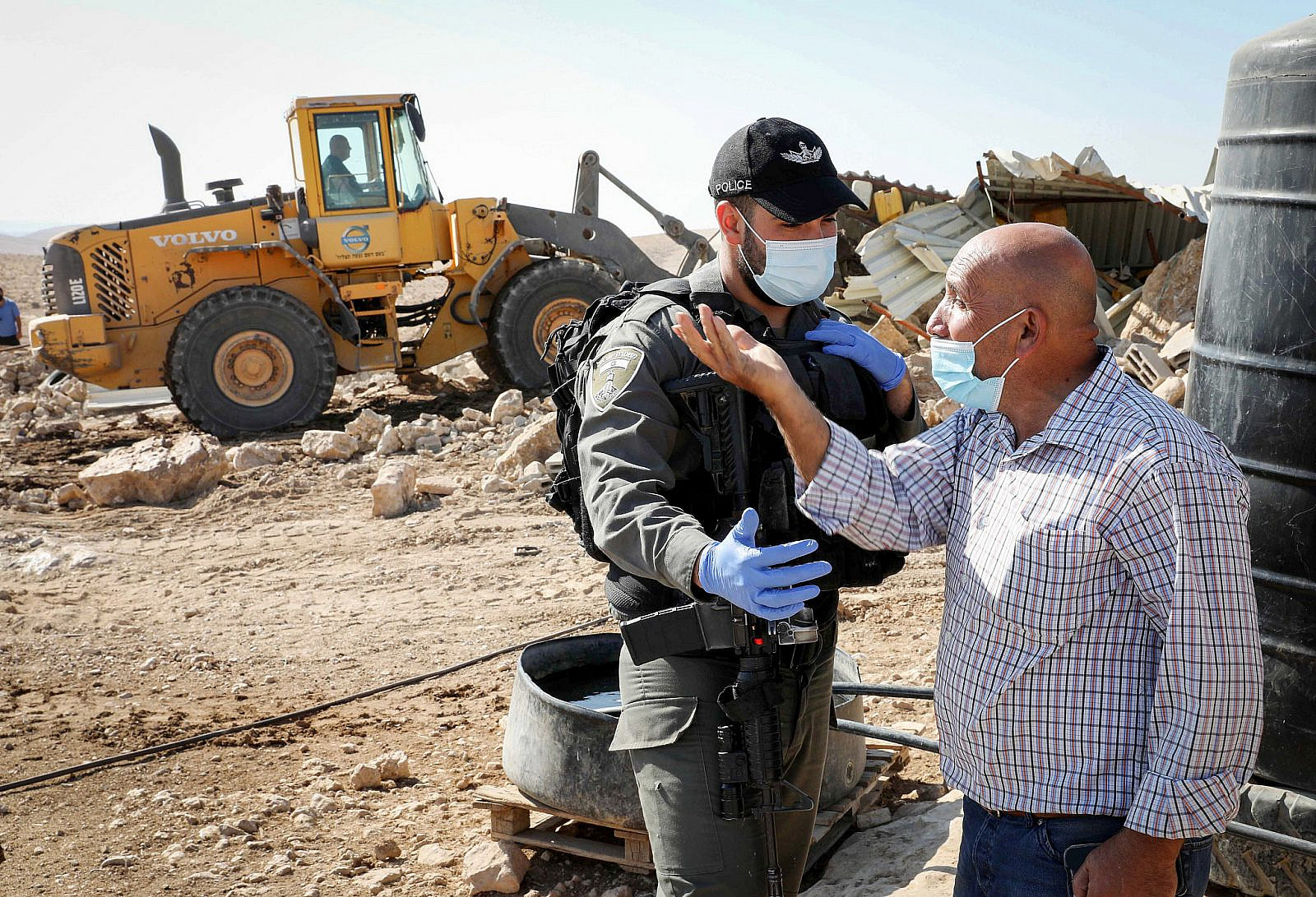
A Palestinian man argues with Israeli forces after they demolish his house and shed, near the West Bank town of Hebron, October 18, 2020. (Wisam Hashlamoun/Flash90)
Given Biden’s political career since that private moment of clarity in 1973, what is there to suggest that he will dramatically halt Washington’s underwriting of Israel’s perpetual oppression of Palestinians? To be sure, Biden will be more subtle; norms will be reinstated, public displays of Palestinian humiliation will be taken down a notch, and the State Department will resume friendly connections with Ramallah. It will look nicer — just like a modernized checkpoint.
Moral backbone
But it doesn’t have to be this way. In 1986, Biden spoke at the Senate’s Foreign Relations Committee not on the situation in Palestine, but rather a similar context in which one group of people was advancing its supremacy over another: apartheid South Africa. Chastising the Reagan administration’s refusal to sanction Pretoria, Biden had this to say:
“I hate to hear an administration and a Secretary of State refusing to act on a morally abhorrent point… I’m ashamed that this country puts out a policy like this that says nothing — nothing. It says continue the same. We put no timetable on. We make no specific demands. We don’t set it down. I’m ashamed that’s our policy. That’s what I’m ashamed of. I’m ashamed of the lack of moral backbone to this policy.”
That “moral backbone” must now be extended to Israel-Palestine, too. But how?
That will all depend on progressives in the United States, who have been resolutely clear that a foreign policy which centers human rights is the natural extension of domestic policies of racial justice, and who believe equality at home and equality abroad go hand in hand. In 2021, progressives will need to remind President Biden of his own early clarity of where Israel’s occupation was going, and demand that he do the decent thing to end Palestinian subjugation by one of America’s closest allies.
Trump’s defeat is a hopeful moment that is desperately needed in our broken, overheating world. It is an opportunity to assert the growing power, clarity of voice, and conviction of a movement whose time has come. Alone together, 14 million Jews and Palestinians remain on the land — separate, yet together. This is our life, our future: together. Yet perpetually underwriting injustice is not a destiny, it is a political choice. Other political choices point toward freedom, equality, and justice. These choices are in our hands.
Boris Johnson has defended the new tier system for England in the face of a growing Conservative backbench revolt – insisting the country needs ‘simplicity and clarity’. There are some encouraging signs about the impact of the lockdown: the R number, the rate at which the virus is transmitted, may now be below 1.0, the lowest level since mid-August.
But it’s rising in Wales – where new restrictions will be imposed from next week, although details have not yet been finalised.
Latest figures show there have been another 16,022 new cases of the virus in the last 24 hours and a further 521 deaths have been reported, which brings the total to 57,551.