(In)dependence Day Celebrations: Masquerading Enslavement As Freedom


By Jude L. Fernando –FEBRUARY 5, 2022

Dr. Jude Fernando
‘Seek ye first the political kingdom, and all things shall be added unto you.’ Kwame Nkrumah (First President of Ghana, 1960)
We got the ‘political’ kingdom, and nothing has been added unto us: A lot has been taken away (Chinua Achebe, 1990)
Viewing the 74th year of independence on 4th February simply as an occasion to celebrate freedom from colonialism fails to recognize the duplicitous and disingenuous nature of the celebrations. Drawn on revisionist/invented history, the ideological foundations of the celebrations pave the way for racial ethnoreligious nationalism to become a dominant force in shaping state-society relations. Despite it being a root cause of thirty years of civil war and episodes of ethnic violence in its aftermath, this revisionist history has become deeply entrenched in society’s consciousness. The strategic use of ethnoreligious nationalism, anchored on this history, has fueled the acceleration of a neoliberal economic revolution, enabling a privileged few to consolidate economic and political power at the expense of the dispossession and deprivation of the majority.
Independence Day celebrations built on such falsities, normalize the defenders of the invented history as patriots and silence those who question its validity. In addition, condemning dissenters as national enemies also delegitimizes their alternative versions of history and aspirations of freedom. Societies enslaved by false histories fail to let morality, equality, and justice be the primary drivers of their choices of political leadership. Today, signs of reversal are evident, as society’s heightened awareness and openness to condemn the political exploits of racism and hypocrisy in the patriotic credentials of political leadership have created a longing for alternative political leadership.
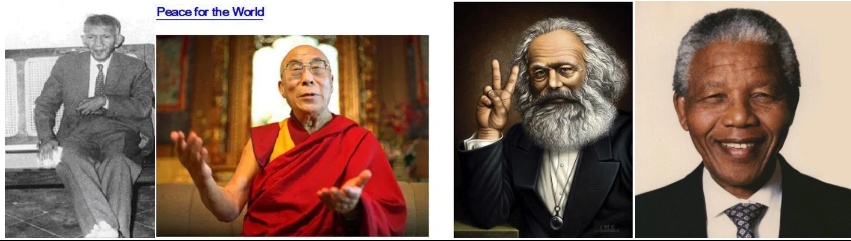
Independence Day celebrations are exclusive because they do not provide equal recognition to those engaged in the independence movement, as its historical narrative is viewed from post-independent ethnoreligious political narratives and the victory over Tamil militants. The Jaffna Youth Congress (JYC) evolved under Handy Perinbanayagam (1899–1977) and pioneered the movement in Ceylon for total national independence (Purna Swaraj). JYC hosted Gandhi, Kmaladevi Chatopadyaya, and Subahs Chandra Bose. JYC was not simply an anti-imperialist movement but also wanted to eradicate social evils within the Tamil community such as untouchability and the dowry system.” JYC’s campaign was “influenced by the Vaikom Satyagraha, which took place in the Travancore state.”
Gandhian ideas inspired the “Inclusive Vision of Perinbanayagam.” Under Perinbanayagam’s leadership, the Jaffna Students’ Congress was formed to “organize a movement embracing young people and all races, creeds, and castes so that they may all come to know one another and join in an earnest endeavor to do the little they can for their country.” Perinbanayagam “never wavered from his ideal of a united and independent Sri Lanka. He believed utterly and steadfastly in the dignity and equality of all human beings and, hence, rejected any form of social exclusivity,” notes Jayathilaka (2012). Not only did the JYC transcend ethnic limitations by diversifying the Ceylonese, but it also overcame the limitations of its peninsular base (Cheran, 2009).
Mahatma Gandhi was the chief guest at the JYC sessions in 1927, where a decision was made to establish similar student organizations in Kandy, Galle, Colombo, and other parts of the country, with the eventual aim of setting up an All-Ceylon Students’ Congress. Santasilan Kadirgamar noted in May 1931 that the decision became a reality at its inaugural meeting at the Plaza Theatre in Wellawatte, Colombo, which was attended by Jawaharlal Nehru, who was holidaying in Sri Lanka at the time. (Jayathilaka, 2012). However, communalism handicapped JYC’s attempts to gain the support of the Sinhala Youth Congress and other leaders in building an inclusive independence movement.
As noted by T. Sabaratnam, visits to Sri Lanka by leaders of India’s freedom struggle “generated greater interest among the Tamils, especially the youth, than among the Sinhalese. Tamils were moved by the emerging Indian talk of ‘Poorna Swaraj’ (Total Freedom), while the moderate Sinhalese leadership decided to reap the benefits from Donoughmore Commission recommendations.” Philip Gunawardene, then in London, questioned the enthusiasm of the Tamil youth for independence and noted:
I longed for the day when the youth of Ceylon would take their place by the side of the young men and women of China, of India, of Indonesia, of Korea, and even of the Philippine Islands in the great struggles of a creative revolution of all the mighty forces of old age, social reaction, and imperialist repression. During the last few years, the Jaffna Students’ Congress was the only organization in Ceylon displaying political intelligence… Jaffna has taken the lead. They have forced their leaders to sound the bugle call for the great struggle for freedom – for immediate and complete independence from imperialist Britain. Will the Sinhalese, who always displays supreme courage, understand, and fall in line? A tremendous struggle faces us. Boycotting the election was only a signal. Every Sinhalese must prepare the masses for a great struggle ahead. (Sabaratnam, 2010).
However, political leaders from the Left failed to build a multicultural movement for equality and freedom because they failed to decolonize the class struggle from racism. They were also disinterested in recognizing the irreducibility of racism to class dynamics and instead aligned themselves with communal-minded political forces. But subaltern classes continued their struggles against oppressive colonial policies. These struggles received the attention of the elite only when it suited them, aiding their efforts to solidify claims to wealth and political power. We must not forget that D.S. Senanayake, the father of the nation, spearheaded ignoble only disenfranchisement of the Malaiyaha Tamils in the plantation sector, not the plantation owners. Even the JVP failed to incorporate the plantation workers in its’ class struggle, instead viewed them as a part of Indian expansionism. Nationalism during the pre-colonial and postcolonial periods are primarily about the consolidation of elite power over the masses. No wonder the country has not had an independent struggle as in India. Neither has any mainstream political party campaigned on a platform of inclusivity to create a sense of freedom for all its ethnic groups.
There was a time when Kandyan’s demanded federalism, but Tamils opposed it, arguing that it would create disunity among different ethnic groups. P. E. Nugawela, led by the Kandyan National Assembly, pleaded for a federal constitution that would give them an autonomous region. Eventually, they broke away from the Ceylon National Congress in 1925. At the Donoughmore Commission, the Kandyan National Assembly delegation pointed out that:
Ours is not a communal claim or a claim for the aggrandizement of a few; it is a claim of a nation to live its own life and realize its own destiny… We suggest the creation of a federal state as in the United States of America… A federal system will enable the respective nationals of the several federal states to prevent further inroads into their territories and build up their own nationalities.
At one point, S.W.R.D. Bandaranaike said, “A thousand and one objections could be raised against the system, but when the objections are dissipated, I am convinced that some form of the federal government will be the only solution.” Subsequently, Bandaranaike’s resort to communal policies fueled political solution hardliners among the Sinhala Buddhist clergy and laity as well as hawkish elements from Sinhala-dominated political parties, who subsequently opposed his attempts to find a political solution to the ethnic conflict in collaboration with Tamil political leaders. Subsequently, the Sinhala and Tamil leaders’ attempts to form different political autonomies in Sri Lanka failed and the Tamil youth resort to armed struggle. Political leaders continued to flirt with the idea of political autonomy; their support or opposition to the idea was a matter of political expediency. Subsequently, they found it impossible to dismantle forces against peaceful solution to the conflict they themselves created, and they became more inclined rely on those forces to mobilize votes. Yet, all successive governments justified the war against Tamil militants as a precondition for political solution to the conflict.
The regime celebrated defeat of the Liberation Tigers of Tamil Eelam (LTTE) in 2009 as partial fulfillment of its promise to unifying the country under one law and one nation, which is in the political consciousness of the Sinhala Buddhist majority as it is an assertion of their position as privileged citizens vis-à-vis minority communities. Such celebrations deter people from critically reflecting on the distortions and transgressions found in the revisionist historical narratives that led to the war of 30 years and violence and episodes of anti-minority violence in the aftermath of the war. The political implications of memorialization to the government continue to impact its decisions as to who could legally memorialize the dead and disappeared during the war. LTTE and Janatha Vimukthi Peramuna (JVP) committed violence, but JVP is permitted to memorialize their fallen heroes every year. The trauma of Tamil and Sinhala parents of missing children is the same. The opportunistic politics of governments since SWRD Bandaranaike must take a fair share of responsibility for deaths of Sinhala and Tamil Youth. In this context, deprivation of only Tamil families to memorialize their lost children undermines future possibilities for creating an inclusive celebration of freedom.
After the threat of the LTTE disappeared, the ethnonationalist forces continued to evolve as a powerful ideology to legitimize the political actors’ claims on state power and suppress any opposition to socially and ecologically responsible demands and efforts. The narrative’s hold over people’s consciousness is that morality and empathy are not the main drivers of their political choices, freeing the politicians of any accountability towards their actions. Such social consciousness embodies traits of racism because it despises the “racialized other.” It was also sexist, as it celebrated the military (whose patriarchal socialization processes normalized what Cynthia Enloe refers to as militarized masculinity) as the primary guardian of the narrative, which subsequently justified the military’s role in affairs hitherto under the preview of civilians.
In 2015, the defeat of the LTTE was not sufficient for President Mahinda Rajapaksa to win the Presidential elections and Yahapalanya (Just administration) government under Maithripala Sirisena assumed power in January 2015. The opposition interpreted the government’s attempts to introduce democratic political reforms, bring wrongdoers to justice, and curb corruption as the unpatriotic punishment of patriots. Episodes of anti-Muslim violence continued during the Maithripala regime replaced the Muslims in the place of Tamils as the threat to security and prosperity of the nation. The opposition quickly coopted the Easter Sunday bombing as evidence of the ruling regime’s inability to protect the nation. Due to pleas of the Catholic hierarchies Sinhala Tamil-unity against the bombing, however, did not turn into anti-Muslim violence as in the past. The two communities support for Gotabaya Rajapaksa’s candidacy for President gain momentum.

No comments:
Post a Comment
Note: only a member of this blog may post a comment.